
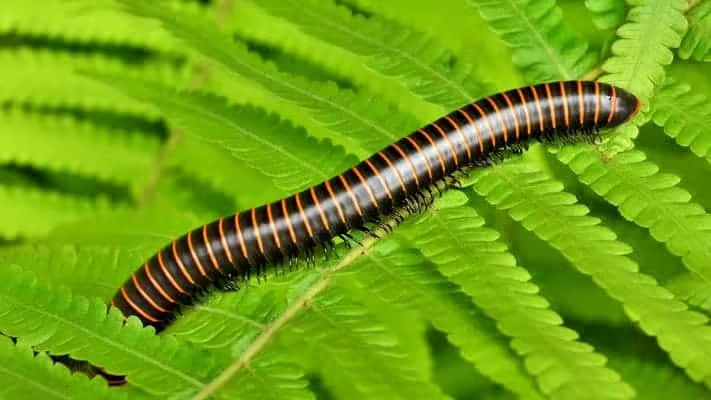
How to Get Rid of Millipedes in Your Home: A Complete Treatment Guide
Millipedes are among the most misunderstood household invaders in the United States. They are not insects, they do not bite or sting in any medically meaningful way for most people, and they do not nest inside wall voids the way ants or rodents do. Yet homeowners still search desperately for how to get rid of millipedes in the home—especially after a rainy week when dozens or hundreds appear along baseboards, in basements, or clustered near foundation walls. If you are seeing millipedes indoors, you are usually dealing with outdoor population pressure plus moisture conditions that push them toward the structure.
This guide is written from a practical treatment perspective—the same framework a Pest Control Company company uses when evaluating a millipede problem. You will learn how millipedes typically enter homes, what light DIY steps can work for early or occasional activity, which treatment methods actually reduce outdoor pressure, what often goes wrong with store-bought sprays alone, and when it is smarter to bring in a licensed technician. You will also see what a Pest Control Company millipede service looks like from inspection through follow-up, how to choose a good provider, and how to prevent millipedes from returning after the crisis is over.
Use this page as a decision guide. If activity is light and recent—a few millipedes after a storm—the DIY section may be enough to break the cycle. If millipedes keep pouring in after every rain, appear in large numbers across the basement or garage, or return despite sealing and cleanup, treat this guide as your bridge to Pest Control Company help—and to platforms like Pest Direct that connect homeowners with local pest control companies ready to inspect and quote the job.
How Millipedes May Have Gotten Into Your Home
Almost every indoor millipede problem starts outdoors. Millipedes feed on decaying organic matter—leaf litter, mulch, rotting wood, compost edges, and damp soil under landscape beds. Populations can grow large in yards that stay consistently moist. Worker-like foragers do not form “colonies” with queens the way ants do; instead, habitat quality and moisture drive numbers. When conditions outdoors become extreme—heavy rain flooding their preferred damp zones, or prolonged drought drying surface litter—millipedes migrate in search of stable humidity. That migration often points them straight at foundations, crawlspace vents, and ground-level doors.
Entry is usually through small structural gaps rather than open living-space doors alone. Common access points include the gap under a garage side door, cracked caulk at the foundation line, utility penetrations for cable and HVAC lines, weep holes, foundation cracks, poorly sealed bulkhead doors, and unsealed gaps where plumbing or wiring enters the home. Door thresholds without sweeps, damaged weatherstripping, and unscreened crawlspace vents are classic millipede highways. Unlike flying pests, millipedes crawl, so anything that bridges soil or mulch to siding multiplies risk: mulch piled against the foundation, dense groundcover, ivy, and leaf piles left against basement walls all act as launch pads.
Moisture is the real magnet. Millipedes desiccate quickly in dry air, which is why many that make it indoors die within a day or two on carpet or tile. That does not mean the problem is solved—it means your outdoor reservoir is still producing invaders. Damp basements, poorly drained crawlspaces, gutters that dump water against the foundation, and overwatered flower beds create long-term habitat right next to the structure. After storms, outdoor populations can surge onto porches, into window wells, and through any gap large enough for a slender, multi-legged body.
Seasonal pressure also matters. Spring and fall rains are peak invasion windows in many regions. Cool, wet weather favors millipede activity near the soil surface. Understanding how millipedes arrived is not academic—it tells you whether the fix is vacuuming a few strays, reducing mulch depth, improving drainage, sealing ground-level gaps, or applying a Pest Control Company perimeter treatment timed to outdoor pressure.
How to Treat a Millipede Problem in Your Home
Effective millipede treatment is not about crushing every individual you see. Visible millipedes indoors are usually a fraction of the outdoor population pressing against your foundation. The goal is to reduce outdoor harborage and moisture, block entry points, and—when pressure is high—use targeted residual treatments that intercept millipedes before they move inside. Pest Control Companies think in systems: assess moisture and debris, map entry points, reduce conducive conditions, apply perimeter products where appropriate, and verify results after the next weather event.
A handful of millipedes after one storm is a different job than a basement floor covered after every rain, or weekly activity despite repeated store-bought sprays. Match the intensity of treatment to the intensity of the problem. Below is how to approach light DIY control, the main treatment methods used in residential work, and the failure modes that turn a seasonal nuisance into a months-long headache.
Treating Light Millipede Problems Yourself
If you have only recently noticed a small number of millipedes in one area—often after heavy rain—start with physical removal and moisture reduction before buying a cabinet full of products. Vacuum or sweep up millipedes and dispose of the bag or empty the canister outdoors. Wipe damp baseboards and dry wet basement corners. Fix obvious outdoor issues: clean gutters, redirect downspouts away from the foundation, and pull mulch and leaf litter back several inches from siding. These steps remove the “why” that keeps millipedes pressing toward the house.
Next, seal the easiest entry points. Install or replace door sweeps on exterior doors, especially garage and basement doors. Caulk gaps where utilities enter. Repair torn window-well covers and screen crawlspace vents if appropriate for your climate and code. Indoors, a dehumidifier in chronically damp basements can make the environment less hospitable for millipedes that do get inside, even though it will not stop outdoor migrations by itself.
Be realistic about what DIY can achieve. Millipedes that are already outdoors in deep mulch beds will not leave because you sprayed a kitchen baseboard. Contact sprays kill individuals on the spot and can look satisfying, but they do little if the foundation perimeter remains a damp buffet of organic debris. If activity is limited to a few individuals after storms, declines after cleanup and sealing, and does not return in force, you may resolve a light problem without a service call. If millipedes return in large numbers after every rain—or if you cannot keep the exterior dry and sealed—escalate.
What Can Go Wrong If Millipede Problems Are Handled Poorly
The most frequent DIY failure is “spray and ignore the yard.” Killing visible millipedes indoors feels productive, but it leaves the outdoor population and the moisture conditions intact. Another failure mode is over-relying on indoor foggers or random baseboard sprays that never reach the foundation perimeter where millipedes actually travel.
Misunderstanding the pest is expensive in time. Treating millipedes like nesting indoor insects leads people to chase wall voids that do not contain nests. Ignoring drainage allows re-invasion even after temporary knockdown. Leaving mulch piled against the foundation recreates perfect habitat within weeks of a cleanup. In multi-unit buildings or homes with shared crawlspaces, treating only the living room floor while exterior harborage remains shared leads to re-invasion through the same ground-level gaps.
Delays also have costs. What starts as a few millipedes after one storm can become a recurring seasonal invasion that stresses households, dirties floors, and—rarely—triggers secondary issues when people overuse pesticides in living spaces. Millipedes can also release mild defensive secretions that stain surfaces or irritate sensitive skin if handled, so large indoor numbers are more than a cosmetic nuisance. The longer outdoor conditions train millipedes to treat your foundation as a refuge, the more thorough the eventual treatment and exclusion must be.
Treatment methods
The approaches a technician chooses between for millipedes, and what each one is good at.
- Inspection of moisture and outdoor harborage
- Millipede control starts with understanding where they live outside. A careful inspection looks at mulch depth and placement, leaf litter, rotting wood, compost proximity, irrigation overspray, grade and drainage, window wells, and crawlspace conditions. Technicians also walk the foundation for gaps, utility penetrations, and door thresholds. Skipping this step is the most common reason DIY treatments cycle endlessly without lasting control—you cannot spray your way out of a wet, mulch-heavy yard that continually reloads the population.
- Harborage reduction and landscaping adjustments
- Reducing outdoor harborage is the backbone of many millipede programs. That means thinning mulch (especially keeping it away from the foundation), removing leaf piles, relocating woodpiles, cleaning gutters, and correcting irrigation that keeps soil perpetually wet against the house. Homeowners who only treat indoors while leaving a deep mulch ring against siding often see rapid re-invasion after the next storm.
- Exclusion and sealing of ground-level entry points
- Door sweeps, weatherstripping, caulking, and sealing foundation cracks reduce the number of millipedes that successfully enter. Exclusion does not kill outdoor populations overnight, but it converts a mass invasion into occasional strays. Pest Control Companies flag gaps homeowners miss—garage thresholds, bulkhead doors, and unsealed sill plates—because those are where millipedes succeed after rain.
- Targeted residual and perimeter treatments
- Residual insecticides applied to the exterior foundation perimeter, entry points, and sometimes interior baseboards in problem rooms can intercept millipedes as they migrate. These treatments work best as part of an integrated plan—not as the only tactic. Broadcast spraying every room is rarely necessary. Exterior perimeter work is especially useful when outdoor pressure is high and weather events repeatedly push millipedes toward the structure.
- Interior cleanup and moisture correction
- Indoors, vacuuming, mopping, and reducing basement humidity address individuals that made it inside and the conditions that keep them alive longer. Fixing plumbing leaks, improving ventilation, and using dehumidifiers support long-term comfort and pest resistance. Moisture correction is where millipede work overlaps with broader home maintenance—and where results last.
- Integrated follow-up after weather events
- Millipede pressure rebounds with rain and cool damp weather. Monitoring after storms, re-checking foundation lines, and scheduling follow-up perimeter service when activity returns are standard in Pest Control Company programs. A one-time spray with no landscaping or exclusion changes is a common consumer disappointment for chronic seasonal invaders.
When You Should Call a Pest Control Company for Millipedes
Call a Pest Control Company when millipedes return after every heavy rain despite sanitation and sealing, when you see large numbers across basements, garages, or first floors, or when activity persists for weeks during wet seasons. You should also call if moisture problems are complex—chronic crawlspace dampness, foundation drainage issues, or landscape grading you cannot correct alone—because product alone will not fix structural moisture drivers.
Call for help if anyone in the household is highly sensitive to pesticides and you want targeted Pest Control Company placement rather than repeated consumer sprays, if you manage a rental property where tenant complaints recur, or if you simply cannot locate how millipedes are entering after a good-faith DIY attempt. Pest Control Companies are not only for “huge” invasions; they are for problems you cannot verify as solved through seasons of weather.
If you are unsure whether you have millipedes or centipedes—especially when speed, leg count, and bite risk matter—do not guess forever. Centipedes are predators with one pair of legs per segment and can bite; millipedes are slower detritivores with two pairs of legs per segment. A trained technician can confirm the arthropod, explain risk level, and recommend a plan sized to your home and yard.
Why a Pest Control Company Is Often Better Than DIY Alone for Millipedes
Pest Control Companies bring three advantages homeowners rarely match: diagnostic skill around moisture and harborage, product selection with proper exterior placement, and a process that includes verification after weather events. Knowing whether the driver is mulch depth, irrigation, grade, or door thresholds changes everything—what to recommend, where to treat, and whether interior work is even needed. Technicians also see patterns: the same wet foundation line that invites millipedes may also support sowbugs, earwigs, and occasional carpenter ant pressure.
DIY products available at retail can knock down individuals for light pressure, but labels, placement rules, and safety constraints limit what a homeowner can effectively do along a full foundation perimeter, in crawlspaces, and around complex landscaping. Pros use integrated methods—harborage reduction guidance plus residuals plus exclusion notes—instead of a single can of spray. They also know when not to spray indoors, which is just as important for a pest that primarily originates outside.
There is also a time and stress calculation. Repeated store runs, weekend caulking projects, and millipedes on the basement floor after every storm add up. A structured service plan converts that uncertainty into a schedule: inspect, treat, adjust landscaping recommendations, follow up after rain, and document results. For many households, that reliability is the real product. Pest Control Company service is not about “giving up”; it is about matching tools to a moisture-driven migration problem that casual indoor cleanup cannot permanently stop.
What the Pest Control Company Treatment Process Looks Like for Millipedes
While companies vary, high-quality residential millipede control follows a predictable arc. Understanding the process helps you evaluate quotes and avoid one-visit mystery sprays with no inspection story. Here is the typical sequence from first call to lasting control.
Inspection and moisture assessment
A technician interviews you about where and when you see millipedes, then inspects basements, garages, foundation lines, landscaping contact points, mulch and debris zones, drainage, and entry thresholds. They map likely outdoor harborage and ground-level access points. Photos of mass invasions after rain help when activity is intermittent.
Treatment plan and prep guidance
You receive a plan that may include exterior perimeter work, limited interior treatment in problem rooms, exclusion notes, and landscaping or moisture recommendations. Prep might mean clearing storage from basement walls, mowing high grass, or reducing outdoor clutter along the foundation. Clear prep instructions are a sign of a careful company.
Initial treatment
The technician applies residuals to the exterior foundation perimeter and entry points, addresses interior baseboards where needed, and explains expected results after the next weather event. Good techs speak in plain language about what will change immediately versus what requires homeowner moisture and mulch adjustments.
Follow-up and adjustment
Because millipede pressure tracks weather, a follow-up after rain or at the next wet period is valuable. The technician reassesses activity, re-treats pressure points if needed, and confirms whether exclusion and harborage changes held. This is where many DIY attempts fail—there is no second look after the storm.
Prevention and maintenance options
After knockdown, many homeowners choose seasonal exterior service during wet months to reduce re-invasion pressure. Exclusion repairs and drainage improvements may be recommended as handyman or homeowner tasks. The end state is fewer conducive outdoor conditions, not only fewer millipedes today.
How to Find a Good Pest Control Company for Millipede Control
A good millipede control provider is licensed where required, carries insurance, and can explain their process without hiding behind jargon. Ask whether they will inspect exterior moisture and mulch conditions—not only spray baseboards. Ask if follow-up after wet weather is included. Be cautious of ultra-cheap “spray the basement” quotes that never discuss drainage, mulch, or door sweeps.
Check recent reviews for mentions of communication, punctuality, and whether seasonal invasions actually improved—not only whether the tech was friendly. Ask about pet and child safety practices, what you need to do before service, and how callbacks work if activity continues after the next storm. For homes with crawlspaces or chronic basement moisture, ask specifically about exterior and moisture-focused experience.
This is also where Pest Direct fits the homeowner journey. After you understand the problem from a guide like this, the next step is not endless product aisles—it is connecting with local pest control companies that already service your type of issue. Pest Direct helps you move from reading about the problem to getting help: find Pest Control Companies in your area, compare options, and request service without guessing which random search result is legitimate. Use educational guides to know what “good” looks like, then use the platform to hire it.
When you request service, share details that speed diagnosis: rooms involved, how long activity has lasted, whether sightings spike after rain, photos of the millipedes, whether you have used sprays already, and any drainage or mulch concerns. Better intake information produces better quotes and faster results.
How to Keep Millipedes From Coming Back
Prevention is the quiet half of millipede control. Outdoors, reduce mulch depth and keep mulch pulled back from siding, remove leaf litter and rotting wood near the foundation, relocate woodpiles away from the house, and improve yard drainage so water does not pool against the structure. Fix gutters and extend downspouts. Avoid overwatering landscape beds next to the foundation. These steps shrink the outdoor population’s preferred habitat.
Seal ground-level entry points: door sweeps, weatherstripping, foundation cracks, utility penetrations, and damaged screens or vent covers. Indoors, keep basements as dry as practical with dehumidifiers if needed, fix plumbing leaks quickly, and vacuum early strays before they accumulate. Exterior maintenance matters as much as indoor cleanliness—a dry, sealed house next to a permanently wet mulch ring will still see pressure.
Think of prevention as reducing the “score” of your home as a refuge during weather extremes. You may never make a property millipede-proof in every season, but you can make outdoor harborage less ideal and entry much harder. Pair that with monitoring—react to the first post-storm wave instead of waiting for a carpet of millipedes—and you stay ahead of the next wet cycle.
Millipedes treatment: common questions
What is the fastest way to get rid of millipedes in the house?
For light activity, vacuum or sweep millipedes up, dry damp areas, and seal obvious ground-level gaps. Address outdoor mulch and leaf litter near the foundation. Contact sprays kill visible millipedes faster but do not stop outdoor migrations. If large numbers return after rain, schedule a Pest Control Company perimeter inspection.
Why do millipedes keep coming back after I spray them?
Sprays usually kill individuals without changing outdoor moisture, mulch, and debris conditions that produce new invaders. Millipedes migrate from outside; indoor spray alone cannot empty the yard. Harborage reduction, drainage improvement, sealing, and exterior perimeter treatment address the source more reliably.
Do natural remedies like diatomaceous earth get rid of millipedes permanently?
Diatomaceous earth and similar products may kill some millipedes that crawl through treated bands, but they rarely eliminate outdoor populations or stop weather-driven invasions by themselves. They work best as a limited support tool alongside moisture control, cleanup, and exclusion. Permanent results require reducing outdoor harborage and blocking entry.
How long does Pest Control Company millipede treatment take to work?
Many homes see fewer indoor millipedes soon after perimeter treatment and sealing, but true success is measured across the next wet weather events. Follow-up may be needed during prolonged rainy periods. Your technician should set expectations based on outdoor conditions found during inspection.
Are millipedes dangerous to people or pets?
Millipedes generally do not bite and are not considered a serious health threat. Some species release mild defensive secretions that can stain surfaces or irritate sensitive skin if handled. The main concern is nuisance from large numbers, not disease transmission. Still, avoid handling them with bare hands when possible.
How can I tell millipedes from centipedes?
Millipedes have cylindrical bodies with two pairs of legs per body segment and move slowly, often coiling when disturbed. Centipedes are flatter, faster, with one pair of legs per segment, and can bite. Correct identification matters for risk messaging and treatment focus. When unsure, capture a photo for a Pest Control Company.
Should I remove mulch to stop millipedes?
You do not always need to eliminate mulch entirely, but reducing depth and pulling mulch away from the foundation helps significantly. Replace thick organic mulch against siding with a drier, less hospitable band where practical. Combine mulch changes with sealing and drainage for best results.
Can Pest Direct help me find millipede control near me?
Yes. Once you understand your millipede problem, Pest Direct connects you with local pest control companies that handle residential millipede and perimeter pest service. Compare providers and request help without starting from zero.
Hand the millipedes problem to someone licensed
Compare local pest control companies that treat millipedes, see what they charge, and get an estimate.