Millipedes
Millipedes are slow-moving, many-legged arthropods that thrive in damp outdoor debris and occasionally wander indoors in large numbers.
How Did I Get Millipedes??
Millipedes live outdoors in damp organic matter—leaf litter, mulch, compost edges, rotting wood, and moist soil near foundations. Populations can become very large in consistently wet yards. When heavy rain floods their habitat or extreme dryness makes outdoor conditions harsh, millipedes migrate in waves toward buildings seeking stable moisture and shelter.
They enter through gaps under doors, foundation cracks, window wells, garage seals, and ground-level vents. Unlike social insects, they are not recruiting to an indoor food source in your kitchen; most indoor millipedes are accidental invaders. Homes with thick mulch against siding, poor drainage, and heavy shade along the foundation experience the strongest seasonal invasions.
Once inside, indoor air is usually too dry for millipedes to thrive long-term, so many die within a day or two. The problem is the volume of invaders during migration events, not a hidden colony breeding in the walls.
How to identify millipedes
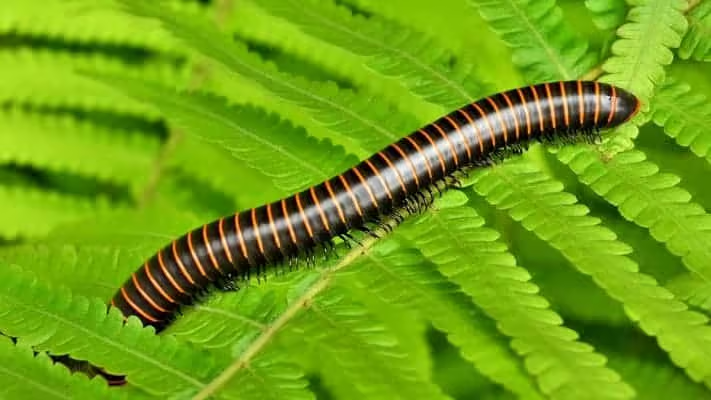
Millipedes have long, cylindrical, segmented bodies with two pairs of short legs per segment, moving in a slow, wave-like motion, and typically coil into a spiral when disturbed.
Signs of a Millipede Problem
Seeing brownish, cylindrical, many-legged arthropods that move slowly in a wave-like motion is the primary sign. Disturbed millipedes often coil into a spiral. Indoors they appear along baseboards, in basements, garages, and near exterior doors—sometimes by the dozens after storms.
Outdoors you may notice them under mulch, in leaf piles, or climbing foundation walls at night during migration. Dead millipedes along thresholds the morning after a rain event are common. They do not leave fabric damage or pantry contamination the way beetles or moths do.
Mass appearances are episodic. A sudden surge after weather changes is more typical than a steady year-round indoor population. Still, repeated waves mean exterior habitat and entry points need correction.
Where Do Millipedes Hide?
Millipedes hide in moist organic debris outdoors: under leaf litter, thick mulch, grass clippings, logs, boards, landscape fabric edges, and damp groundcover. They stay close to the soil surface where humidity remains high and feed on decaying plant material.
Indoors they may rest temporarily in basements, crawlspaces, garages, and along cool foundation walls, especially near the cracks they used to enter. They do not typically establish long-term nesting sites in dry living areas. Window wells and door thresholds are frequent collection points during migrations.
Because the reservoir population lives outside, sweeping indoor millipedes without changing mulch depth, drainage, and sealing only treats symptoms until the next weather trigger.
Garden
commonPlanted beds and vegetable gardens that attract pests feeding on plants and soil-dwelling insects.
Foundation
commonThe base structure of the home, where cracks and gaps give pests direct access indoors.
Basement
occasionalA below-grade space that is often damp and dark, making it attractive to a wide range of pests.
Lawn
occasionalGrass and turf areas where ground-dwelling pests nest and forage.
Why Are Millipedes Bad for My Home?
Millipedes do not bite, damage wood or wiring, or infest stored food. They are a nuisance pest: large numbers indoors are unpleasant, can leave stains or a mild defensive odor when crushed, and create cleanup work after migration events. Some people also dislike the sight of coiled millipedes on floors and carpets.
Heavy outdoor populations can indicate excess moisture and organic buildup against the foundation, conditions that may favor other moisture-related pests as well. Slippery masses of millipedes on steps or entryways after rain are occasionally a minor outdoor hazard.
The main cost of ignoring the problem is annual repeat invasions. Exclusion and landscape moisture management usually provide a durable fix without dramatic indoor chemical use.
| Concern | Severity | What it means |
|---|---|---|
| NuisancePrimary | low | General unwanted presence of pests that disrupts everyday life without a specific health or property impact. |
| Odor | low | Unpleasant smells caused by pest waste, nesting, or decomposing pests. |
What millipedes put at risk, and how urgent each one is.
How Do I Get Rid of Millipedes?
Focus on outdoor habitat and entry points. Rake leaf litter, thin mulch (keep it several inches away from the foundation and avoid deep piles), remove rotting wood, and improve drainage so soil near the house dries between rains. Seal gaps under doors, repair weatherstripping, and close foundation cracks and utility openings.
Indoors, vacuum or sweep invaders and dispose of them; dehumidify basements if humidity is high. Perimeter insecticide applications along the foundation can reduce numbers during peak migration when combined with habitat changes. Indoor sprays have limited lasting value because millipedes are arriving from outside, not breeding in rooms.
For properties that flood with millipedes every wet season, Pest Control Company perimeter treatment timed before peak migration, plus exclusion and mulch recommendations, typically outperforms reactive indoor cleanup alone.
Methods, what a professional visit looks like, and what goes wrong when millipedes are treated the wrong way.
When Should I Call a Pest Control Company for Millipedes?
Call a Pest Control Company when mass invasions overwhelm doorways and basements after storms, when DIY sealing and mulch reduction are not enough, or when you want preventive perimeter service before the wet season. Pest Control Companies can treat foundation lines effectively and identify grading, irrigation, and harborage issues that keep populations high.
Service is also useful for large properties, dense landscaping, or homes with many ground-level entry points that are hard to seal without guidance. If other moisture pests appear alongside millipedes, a broader inspection may be warranted.
Ask for a plan that pairs any chemical application with specific landscape and exclusion steps. That combination produces the longest reduction in seasonal millipede pressure.
Millipedes: common questions
Do millipedes bite?
No. Millipedes do not bite people or pets. They may release a mild defensive fluid that can irritate sensitive skin if handled, so it is best not to crush them with bare hands. They are a nuisance rather than a medical pest.
What is the difference between millipedes and centipedes?
Millipedes are slow, cylindrical, and have two pairs of legs per body segment; they feed on decaying plant matter. Centipedes are flatter, faster predators with one pair of legs per segment. Control for both includes moisture reduction, but their biology and risks differ.
Why do millipedes invade after rain?
Flooded outdoor harborage pushes them to seek drier or more stable conditions, and foundations offer shelter. Improving drainage and sealing entry points reduces rain-driven waves. Outdoor population size determines how dramatic the invasion becomes.
Will millipedes live and breed inside my house?
Usually not for long. Indoor humidity is typically too low, and most invaders die within days. The continuous problem is new millipedes entering from outside. Exclusion and yard moisture control stop the supply.
Does mulch cause millipede problems?
Deep mulch against the foundation holds moisture and organic matter that millipedes love. Pulling mulch back from siding and keeping depth moderate often reduces invasions significantly. Other damp debris can play the same role.
How do I clean up large numbers of millipedes?
Vacuum or sweep them and empty the debris outdoors. Avoid crushing many at once indoors if odor bothers you. Then seal entry points and address exterior mulch and drainage so the next storm does not repeat the event.
Get millipedes help near you
Search local, licensed pest control companies by ZIP code.
Looking for a specific service? Browse general pest control companies.