
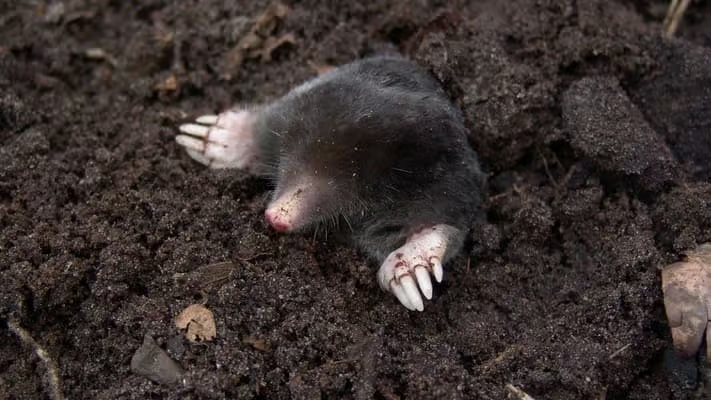
How to Get Rid of Moles in Your Home: A Complete Treatment Guide
Moles are not house invaders in the usual sense. They are burrowing mammals that spend nearly their entire lives underground, tunneling through lawns and landscape soils in search of earthworms, grubs, and other soil insects. What brings them into conflict with homeowners is not an attic nest or a kitchen trail—it is raised winding ridges, volcano-shaped soil mounds, spongy turf that collapses underfoot, disrupted plant roots, and lawns that look ruined after a wet spring of intensive foraging. If you are searching for how to get rid of moles in your home context, you are really protecting homeowner property: the yard, garden edges, walkway safety, and the outdoor investment that surrounds the structure.
This guide is written from a practical treatment perspective—the same framework a Pest Control Company pest or wildlife control company uses when evaluating mole damage. You will learn what attracts moles to residential properties, what light DIY steps sometimes help, which methods actually reduce active animals, what often goes wrong with repellers and home remedies, and when skilled trapping or Pest Control Company service is the smarter path. You will also see what a Pest Control Company mole job looks like from inspection through follow-up, how to choose a good provider, and how to reduce the odds of another season of ridge networks across the front lawn.
Use this page as a decision guide. If damage is light and you can identify active runways and place legal traps correctly, careful DIY may work. If ridges keep spreading, if you cannot tell active tunnels from abandoned ones, or if you are dealing with extensive landscape damage and possible confusion with voles or gophers, treat this guide as your bridge to Pest Control Company help—and to platforms like Pest Direct that connect homeowners with local companies ready to inspect and quote the job. Always follow local wildlife regulations for trapping and control methods.
How Moles May Have Gotten Onto Your Property
Moles do not “break into” living rooms. They expand underground from neighboring yards, greenbelts, creek edges, golf-adjacent open land, or previously unnoticed corners of your own lot. What draws them is food: moist soils rich in earthworms, grubs, and soil invertebrates. Ironically, a well-watered, healthy lawn that supports abundant prey can be more attractive than a dry, compacted patch. Seasonal increases in grub populations, soft soil after rains, and irrigated turf create ideal foraging conditions.
Surface evidence is the invasion story you see. Raised ridges are shallow feeding tunnels pushed up as moles hunt just below the grass roots. Volcano-like mounds are excavated soil from deeper systems. Spongy ground that gives way underfoot means the root zone has been lifted from firm soil contact. Unlike voles, moles do not typically leave open surface runways through grass or girdle tree bark; their damage is subterranean architecture, not above-ground trails. Pocket gophers produce different mound and tunnel patterns—correct identification prevents the wrong control plan.
Moles rarely enter homes. Indoor rodents require a different inspection entirely. The property risk is landscape and turf: aesthetic damage, mowing difficulty, trip hazards on uneven ground, stressed or dead grass patches where sod was separated from soil, and secondary use of abandoned tunnels by other animals. Understanding food-driven tunneling explains why simply flattening ridges without removing active moles produces a weekly cycle of new damage—and why grub treatment alone does not always make moles leave if earthworms remain plentiful.
How to Treat a Mole Problem on Your Property
Effective mole treatment is not about crushing every ridge with a lawn roller and hoping for the best. Visible surface damage is a map of underground activity. The goal is to identify active main runways, remove or exclude the animals using legal, effective methods—trapping is generally the most reliable—and, where appropriate, reduce soil insect populations that contribute to long-term attractiveness. Pest Control Companies think in systems: confirm moles versus voles or gophers, find active tunnels, set traps correctly, monitor, and discuss realistic prevention without promising a permanently mole-proof earthworm-rich lawn.
A few short ridges after rain are a different job than property-wide mound fields and years of recurring damage. Match intensity to pressure. Below is how to approach light DIY control, the main methods used in residential mole work, and the failure modes that leave lawns looking like relief maps every spring and fall.
Treating Light Mole Problems Yourself
If damage is recent and limited, start by confirming you have moles: raised ridges, conical mounds, no open surface vole highways through grass, and soft tunnels under turf. Mark fresh activity by gently pressing a short section of ridge flat and checking within a day whether it is reopened—reopened runs are active and worth targeting. Avoid random treatment of every old, collapsed tunnel; abandoned systems waste effort.
Where legal and appropriate, properly set mole traps in active main runways are the DIY method most likely to work—if you follow manufacturer instructions, local regulations, and safety rules for pets and children. Many homeowners fail not because traps “don’t work,” but because traps sit in inactive side tunnels. Castor oil products, vibrating stakes, chewing gum myths, mothballs, and flooding tunnels produce inconsistent or poor results and can create other yard problems. Grub treatments may help reduce one food source over time but will not remove moles that still have earthworms.
Be patient and precise. If activity is limited, traps are set correctly in active runs, and new ridges stop after capture, you may resolve a light problem without a service call. If new tunnels appear after you collapse a few ridges, if you cannot find main runways, or if damage expands across the yard, escalate to experienced help rather than buying another round of unproven repellers.
What Can Go Wrong If Mole Problems Are Handled Poorly
The most frequent DIY failure is cosmetic: rolling or stomping ridges every weekend without trapping active animals. The lawn looks better for a day and worse after the next foraging bout. Another failure mode is relying on sonic spikes, folk remedies, or illegal toxicants that endanger pets, wildlife, and water while moles continue tunneling.
Misidentification is costly. Treating vole bark damage or gopher mounds as moles wastes time and leaves the real pest unaddressed. Over-treating grubs alone creates false hope when earthworms still feed a resident mole. Flooding tunnels can damage turf and roots without lasting control. Delays also have costs: trip hazards, dead turf patches, stressed ornamental beds, and frustration that peaks during the best weather of spring and fall when moles are most active near the surface.
Ignoring local regulations can create legal problems if restricted methods or improper relocation are used. The longer an active system expands, the more landscape recovery work follows even after successful trapping.
Treatment methods
The approaches a technician chooses between for moles, and what each one is good at.
- Species and damage identification
- Confirm moles versus voles, pocket gophers, or other diggers. Ridge and mound shape, presence or absence of surface runways, and plant damage patterns guide the plan. Wrong identity means wrong tools and wasted weeks.
- Active runway mapping
- Finding tunnels still in daily use—especially travel runways between nesting and feeding areas—is the core skill of mole control. Surface probing, tracking fresh mounds, and the press-and-check method help. Random mound bombing is not a substitute for mapping.
- Trapping programs
- Trapping is generally the most effective control method when devices are placed correctly in active runs by someone experienced with mole behavior. Multiple traps and follow-up checks improve success. Always follow label, safety, and local wildlife rules.
- Soil insect management where appropriate
- Reducing grubs and some soil insects can make a lawn somewhat less attractive over time, especially when grubs are abundant. This is support work, not a guarantee of mole departure when earthworms remain. Integrate with turf care advice rather than over-applying products.
- Habitat and landscape adjustments
- Barrier methods around high-value garden beds, careful irrigation management, and protection of critical root zones can reduce impact even when occasional moles pass through the broader property. Expectations should stay realistic for open suburban soils.
- Follow-up and turf recovery
- After animals are removed, leveling tunnels, re-seeding bare patches, and monitoring for new activity complete the job. A one-time flatten with no verification invites the next ridge line within days if moles remain.
When You Should Call a Pest Control Company for Moles
Call a Pest Control Company if ridges and mounds keep spreading despite DIY attempts, if you cannot locate active main runways, or if landscape damage is extensive across lawns and beds. Correct trap placement is a skill; poorly placed traps waste time while property damage continues. Pest Control Companies are also useful when you need to distinguish mole damage from vole runways or gopher activity.
You should call for help if household members cannot safely manage traps, if local rules make DIY control impractical, or if you want integrated advice on grubs and turf recovery after removal. Mole control is outdoor property protection—waiting until the entire front yard is a network of soft tunnels only increases repair work.
If new tunnels appear after you collapsed ridges or tried repellers, the animal is still present. That is the right time for systematic Pest Control Company trapping rather than another month of surface leveling alone.
Why a Pest Control Company Is Often Better Than DIY Alone for Moles
Pest Control Companies bring three advantages homeowners rarely match: accurate damage diagnosis, efficient active-runway trapping, and realistic prevention talk without miracle claims. Finding the tunnels moles actually use daily is harder than it looks when a yard is covered with old scars. Experienced trappers read fresh soil, main highways, and feeding spur patterns. They also know regional seasonal peaks.
DIY traps can work for determined homeowners who study placement carefully and follow the law. Many people, however, cycle through repellers and remedies while moles re-open runs nightly. Pros use methods that match biology—capture of active animals—rather than hoping vibrations or scents empty a food-rich lawn. They can also advise when grub management is worth adding and when it will not be enough alone.
There is a time and property calculation. Repeated weekend ridge stomping, failed gadgets, and a lawn you are embarrassed to mow add up. A structured service plan converts that into inspection, trapping, verification, and recovery steps. For many homeowners, that reliability is the real product. Pest Control Company service is not overkill for “just a yard pest”; for landscape-focused damage, the yard is part of the home’s value and safety.
What the Pest Control Company Treatment Process Looks Like for Moles
While companies vary, high-quality residential mole control follows a clear outdoor process. Understanding it helps you evaluate quotes and avoid mystery “repellent only” programs with no trapping skill. Here is the typical sequence from first call to quieter turf.
Inspection and identification
A technician walks the property, distinguishes mole signs from vole or gopher damage, marks fresh ridges and mounds, and estimates how many active systems may be involved. They discuss irrigation, grub history, and prior DIY attempts. Photos of overnight new ridges help when activity is intermittent.
Control plan and safety guidance
You receive a plan focused on trapping active runways and any supporting turf measures. Prep may include noting pet areas, kids’ play zones, and access for trap checks. Clear talk about legal methods and expected follow-up is a sign of a careful company.
Trap placement and monitoring
Traps are set in confirmed active runs and checked on a schedule. Good technicians explain what they found underground and adjust placement if activity shifts. This step is where expertise shows most clearly.
Follow-up and confirmation
After captures, the property is monitored for new ridges. Additional trapping addresses remaining animals. Cosmetic leveling is more useful after activity stops than during peak tunneling.
Recovery and prevention options
Re-seeding, soil leveling, and optional soil insect management support recovery. Seasonal check-ins may help in high-pressure neighborhoods. The end state is stable turf—not a claim that no mole will ever cross the property line again.
How to Find a Good Pest Control Company for Mole Control
A good mole control provider is experienced with trapping, understands local wildlife rules, carries appropriate licensing and insurance where required, and can explain how they find active runways. Ask whether trapping is part of the plan, how they tell moles from voles, and whether follow-up visits are included. Be cautious of ultra-cheap programs that sell only spikes or repellents with no field skill story.
Check recent reviews for mentions of lasting lawn improvement, not only friendly visits. Ask about pet safety around traps, how long a typical job takes, and what happens if new ridges appear after service. For large properties or heavy damage, ask specifically about multi-visit trapping experience.
This is also where Pest Direct fits the homeowner journey. After you understand the problem from a guide like this, the next step is not endless gadget aisles—it is connecting with local pest and wildlife control companies that already handle residential mole damage. Pest Direct helps you move from reading about the problem to getting help: find Pest Control Companies in your area, compare options, and request service without guessing which random search result is legitimate. Use educational guides to know what “good” looks like, then use the platform to hire it.
When you request service, share details that speed diagnosis: how long ridges have been appearing, photos of mounds and tunnels, yard size, irrigation habits, prior grub treatments, and what DIY methods you have already tried. Better intake information produces better quotes and faster results.
How to Keep Moles From Coming Back
Prevention for moles is about reducing attractiveness and impact—not sealing the house like a rodent job. Maintain turf thoughtfully: address heavy grub infestations when they are documented and appropriate to treat, avoid creating unnecessarily waterlogged soils that concentrate prey and easy digging, and protect high-value beds with buried hardware-cloth barriers where practical. Understand that healthy soils with earthworms can still support occasional mole visits; absolute exclusion of a fossorial mammal from an open suburban yard is rarely realistic.
After control, restore grade and grass so soft tunnels do not become permanent trip hazards. Monitor for fresh ridges in peak spring and fall activity windows and respond early rather than waiting for full-yard networks. Coordinate with neighbors when shared greenbelts feed continual re-invasion—your perfect trapping job can face new migrants from the lot next door.
Think of prevention as lowering the score of your lawn as an all-you-can-eat soil buffet and reducing how long an animal can work unnoticed. Pair sensible turf care with rapid response to the first new active runways, and you protect the property grounds that frame your home without expecting a permanently mole-free planet.
Moles treatment: common questions
What is the fastest way to get rid of moles in the yard?
Correctly set traps in active main runways are generally the fastest reliable method. Flattening ridges alone does not remove moles. If you cannot find active runs or damage is widespread, Pest Control Company trapping usually outperforms repellers and home remedies.
Do moles eat plant roots and garden vegetables?
Moles primarily eat earthworms, grubs, and soil insects, not plant material as a staple diet. Their tunneling can still damage roots by disturbing soil and lifting sod. If plants are eaten above ground or bark is girdled, consider voles or other pests.
Will killing grubs get rid of moles?
Reducing grubs can help when grubs are a major food source, but moles also feed on earthworms and other soil life. Grub treatment alone does not guarantee moles will leave. Trapping active animals is usually still needed for immediate control.
Are mole repellers effective?
Sonic spikes, chewing gum, and many repellent claims have inconsistent real-world results. Some moles may shift temporarily, then return. Trapping in active runways remains the most reliable method for established problems.
Do moles enter houses?
Moles almost never enter living spaces; they live underground in the yard. Indoor rodents require a different inspection. Focus mole control on lawn tunnel systems rather than interior exclusion.
How can I tell mole damage from vole damage?
Moles create raised ridges and volcano-like mounds without open surface paths through grass. Voles leave narrow surface runways, small open burrows, and often damage bark or bulbs. Correct identification ensures the right control approach.
Is it legal to trap or relocate moles myself?
Rules vary by state and locality regarding trapping, relocation, and permitted methods. Use legal, humane approaches and check local wildlife regulations before acting. A licensed Pest Control Company can handle control in compliance with local rules.
Can Pest Direct help me find mole control near me?
Yes. Once you understand your mole problem, Pest Direct connects you with local companies that handle residential mole and lawn pest service. Compare providers and request help without starting from zero.
Hand the moles problem to someone licensed
Compare local pest control companies that treat moles, see what they charge, and get an estimate.