
How to Get Rid of Opossums in Your Home: A Complete Treatment Guide
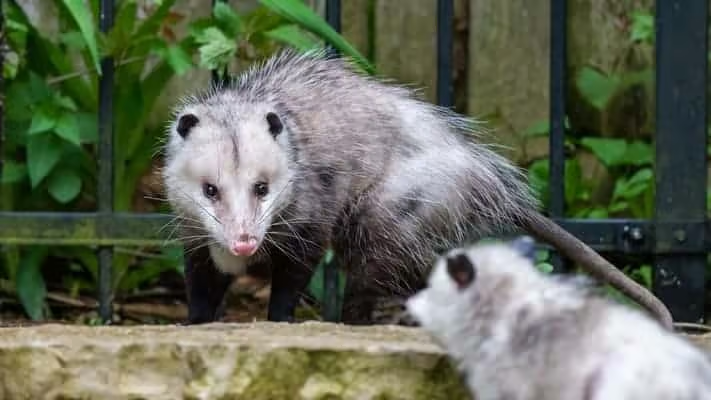
Opossums are nocturnal marsupials—cat-sized animals with grayish-white fur, a pointed pink snout, hairless ears, and a long, hairless prehensile tail. They forage opportunistically for insects, fruit, small animals, pet food, and garbage, which makes residential yards natural night routes. They are largely solitary and generally not aggressive, but they readily den under decks, sheds, porches, staircases, and in crawlspaces or, less often, attics when an opening provides easy access. If you are searching for how to get rid of opossums in your home, you are usually dealing with a wildlife conflict: food attractants plus a sheltered den site, not a spray-and-pray insect problem.
This guide emphasizes a humane wildlife approach. The goals are to protect people, pets, and property; comply with local and state wildlife regulations; remove or exclude animals without trapping young inside structures; and seal den sites so the problem does not simply move three feet to the next gap. You will learn how opossums are drawn to properties, what light DIY steps are appropriate, which methods Pest Control Companies use, what goes wrong with illegal relocation or premature sealing, and when to call licensed help. You will also see what a Pest Control Company wildlife job looks like from inspection through exclusion and cleanup, how to choose a good provider, and how to prevent return visits.
Use this page as a decision guide. If an opossum is only raiding unsecured trash and has no den under the structure, securing food may be enough. If an animal is living under a deck or in a crawlspace, if you hear ongoing activity in voids, or if young may be present, treat this guide as your bridge to Pest Control Company help—and to platforms like Pest Direct that connect homeowners with local wildlife and pest companies ready to inspect and quote the job. Never handle wild opossums with bare hands, and never permanently seal an active den without confirming vacancy—including any joeys.
How Opossums May Have Gotten Into or Under Your Home
Opossums are drawn by easy calories and easy shelter. Unsecured garbage, pet food left outdoors overnight, fallen fruit, accessible compost, bird seed spillage, and abundant insects or small prey turn a yard into a reliable night restaurant. Once food is regular, any dark, quiet cavity becomes a candidate den: gaps in deck skirting, damaged lattice, open crawlspace vents, spaces under sheds and porches, hollows near foundations, brush piles, and occasionally attic or roof access when larger openings exist. They often use existing gaps rather than chewing elaborate new entries the way some rodents do—though they can enlarge weak materials and disturb insulation or screens.
Weather and life stage matter. Cold snaps, storms, and the need to shelter young increase the value of a dry under-structure den. Because opossums are nocturnal, homeowners often discover the problem through evidence rather than daytime sightings: overturned trash, empty pet bowls, droppings near access points, musky odors, or thumping and scratching under floors at night. Tracks of a cat-sized animal with a distinctive walk, or a spotlight glimpse of the pink snout and bare tail, distinguish opossums from raccoons, cats, or skunks.
Understanding the pathway—food first, den second, or a den discovered while foraging—shapes the fix. Removing food without sealing a preferred den may only reduce visits temporarily. Sealing a den while an animal or young remain inside creates odor, suffering, and sometimes structural mess as the animal tries to dig out. The correct sequence is attractant reduction, confirmation of occupancy and young, legal removal or one-way exclusion as allowed, then permanent repairs and sanitation. That sequence is the heart of humane, regulation-aware opossum work.
How to Treat an Opossum Problem at Your Home
Effective opossum control is exclusion-centered and regulation-aware. Visible animals walking the fence line are often only the foraging half of the story; the den under the deck is the half that keeps them on the property. The goals are to stop easy food, remove animals humanely and legally when needed, exclude den sites after confirmed vacancy, and clean soiled areas. Pest Control Companies think in systems: inspect for dens and young, check local wildlife rules for trapping and relocation, use live capture or one-way doors where appropriate, repair skirting and vents, and advise on sanitation and parasite concerns such as fleas.
A one-night trash raid is a different job than a nursing female under a porch or repeated crawlspace noise. Match intensity to the situation. Below is how to approach light DIY control, the main methods used in residential wildlife work, and the failure modes that create illegal, inhumane, or recurring problems.
Treating Light Opossum Problems Yourself
If activity appears limited to nighttime foraging without a settled den, start with attractant removal. Secure trash in animal-resistant containers, bring pet food and water bowls indoors at night, pick up fallen fruit, manage compost carefully, and reduce easy seed or garbage access. Motion lighting and removing dense cover near foundations can make the yard less comfortable as a private dining room. These steps alone resolve many casual visitor problems.
If you suspect a den under a deck or shed, do not immediately nail everything shut. Confirm activity: flour or sand tracking at entrances, infrared cameras, or Pest Control Company inspection help determine whether the space is occupied and whether young may be present. Never seal an active den. Where local law allows and the situation is simple, some homeowners install sturdy exclusion materials after confirmed vacancy—hardware cloth or solid skirting secured so animals cannot push back in, with edges buried or fastened to prevent digging under. Chimney caps and vent screens prevent other access points.
Be extremely cautious with DIY trapping. Many jurisdictions regulate capture, possession, and relocation of wildlife; improper relocation can be illegal, inhumane, and ineffective if a den remains open. If you are unsure of the law, if young may be present, if the animal is in a crawlspace or attic, or if exclusion requires structural skill, escalate to a licensed wildlife Pest Control Company rather than improvising.
What Can Go Wrong If Opossum Problems Are Handled Poorly
The most serious DIY failure is sealing an occupied den. Animals—and especially young—trapped inside can die, create severe odors, attract flies, and force destructive escape attempts through insulation or other weak points. Another failure mode is illegal trapping or relocation that violates local wildlife rules or dumps stressed animals into unsuitable habitat where they suffer or return.
Confronting or cornering an opossum can provoke defensive hissing, bluffing, or rare defensive bites; pets that fight wildlife risk injury and parasites. Leaving food out “just this once” after exclusion trains the next visitor. Incomplete skirting that looks closed from the patio but open at a back corner simply moves the den entrance. Delays also have costs: chewed screens, soiled crawlspaces, flea introductions, and nightly noise that erodes sleep and patience.
Assuming opossums are “harmless so ignore them forever” under a deck can still mean property damage and sanitation issues. The balanced view is respect for a generally non-aggressive species plus firm, legal exclusion of structures humans own. Poor handling destroys that balance.
Treatment methods
The approaches a technician chooses between for opossums, and what each one is good at.
- Inspection for dens, access points, and young
- Locate day dens under structures, check attic or crawlspace involvement, identify all gaps, and assess whether dependent young are likely. Sealing without this step is the most common and most serious DIY error in wildlife work.
- Attractant management
- Securing garbage, pet food, fruit, and other outdoor food reduces the reason opossums invest nightly effort in your yard. Attractant work supports exclusion; exclusion without food management invites the next animal to test remaining gaps.
- Legal live capture or one-way exclusion
- Depending on local regulations and site conditions, Pest Control Companies may use live traps, one-way exclusion doors that allow exit but not re-entry, or other approved methods. Timing around breeding and young is critical. Homeowners should not assume relocation is always legal.
- Permanent exclusion and repairs
- After vacancy, repair skirting, lattice, vents, crawlspace doors, and soil gaps with materials animals cannot easily defeat. Quality exclusion is the lasting product. Temporary boards that leave gaps recreate the same den next month.
- Sanitation and parasite awareness
- Droppings, nesting debris, and fleas may remain after removal. Careful cleanup, with appropriate protective practices, protects household health. Heavy contamination may need Pest Control Company cleaning guidance.
- Follow-up monitoring
- Check repaired areas for new digging or re-entry attempts. Address secondary openings the first den visit revealed. A one-night capture with no exclusion is a revolving door.
When You Should Call a Pest Control Company for Opossums
Call a Pest Control Company if an opossum is denning under a deck, porch, shed, or in a crawlspace; if you hear ongoing activity in structural voids; or if you are unsure whether young are present. DIY sealing in those situations risks trapping animals and creating odor or structural problems. Pest Control Companies are also important when local rules limit homeowner trapping or relocation—they know legal options for your area.
You should call for help if animals return after you secured trash alone, if attic access is possible, if pets keep encountering wildlife at night, or if droppings and debris need careful cleanup. Wildlife work is not only for “dangerous” species; it is for correct, humane resolution of denning conflicts.
If an opossum appears sick, unusually aggressive, or active in odd daytime patterns, contact local animal control or a wildlife Pest Control Company for guidance rather than approaching the animal. Do not wait until a den is fully established with young if you already know access exists—early exclusion after a vacancy check is easier than a nursery situation.
Why a Pest Control Company Is Often Better Than DIY Alone for Opossums
Pest Control Companies bring three advantages homeowners rarely match: regulatory knowledge, den and juvenile assessment skill, and exclusion craftsmanship that lasts. Wildlife laws vary widely; what a neighbor did last year may be illegal or unethical on your property this year. Technicians trained in humane wildlife control inspect for young, choose legal methods, and install one-way devices or complete repairs in the right order.
DIY attractant control is valuable and every homeowner should do it. DIY trapping and structural exclusion, however, go wrong often enough that crawlspace and deck dens are classic Pest Control Company jobs. Pros integrate capture or exclusion with permanent materials—hardware cloth, proper fasteners, buried edges—instead of a tarp and hope. They also advise on flea and sanitation issues after denning.
There is a safety and ethics calculation. Avoiding bite risk, pet fights, illegal relocation, and trapped animals is worth more than a weekend experiment. A structured wildlife service converts conflict into a plan: inspect, remove or exclude humanely, repair, clean, prevent. For many households, that reliability and peace of mind are the real product. Pest Control Company service is not hostility toward opossums; it is coexistence through secure buildings and secured food, with laws and animal welfare respected.
What the Pest Control Company Treatment Process Looks Like for Opossums
While companies vary, high-quality residential wildlife control follows a humane, inspection-first arc. Understanding the process helps you evaluate quotes and avoid “trap only, no seal” jobs that invite the next animal. Here is the typical sequence from first call to lasting exclusion.
Inspection and occupancy assessment
A technician interviews you about sightings, noise, trash raids, and pets, then inspects under decks, crawlspaces, sheds, vents, and other likely dens. They look for multiple openings, signs of young, and attractants. Photos and activity timing help when the animal is only present at night.
Legal plan and homeowner prep
You receive a plan that may include live capture, one-way exclusion, attractant changes, and permanent repairs. Prep might mean securing pets, clearing access to skirting, or changing trash routines. Clear discussion of local regulations is a sign of a careful company.
Removal or exclusion
Using approved methods, the technician ensures animals can leave or are captured legally, with special care during seasons when young may be present. Good techs explain timing and why permanent sealing waits for vacancy confirmation.
Repairs and sanitation guidance
After vacancy, openings are closed with durable materials. Droppings and nesting material are addressed with appropriate precautions. Follow-up may check for re-entry attempts at missed gaps.
Prevention and monitoring
Ongoing trash and pet-food discipline, maintained skirting, and screened vents keep the property from re-scoring as easy habitat. The end state is a den-proof structure and a less rewarding yard—not a war on every opossum in the county.
How to Find a Good Pest Control Company for Opossum Control
A good opossum or wildlife provider is licensed where required, carries insurance, understands local wildlife regulations, and emphasizes humane exclusion over illegal or cruel methods. Ask how they check for young, whether exclusion repairs are included or quoted separately, and how they handle crawlspace or deck dens. Be cautious of ultra-cheap “trap and dump” quotes that never discuss sealing or laws.
Check recent reviews for mentions of lasting results, communication, and clean workmanship on skirting and vents—not only same-day trapping. Ask about pet safety during service, what you must do with trash and pet food, and how warranties work if animals return through a new gap. For attics or complex crawlspaces, ask specifically about wildlife exclusion experience.
This is also where Pest Direct fits the homeowner journey. After you understand the problem from a guide like this, the next step is not improvising with illegal traps—it is connecting with local wildlife and pest control companies that already handle residential opossum conflicts. Pest Direct helps you move from reading about the problem to getting help: find Pest Control Companies in your area, compare options, and request service without guessing which random search result is legitimate. Use educational guides to know what “good” looks like, then use the platform to hire it.
When you request service, share details that speed diagnosis: where the animal dens or forages, how long activity has lasted, photos of openings or damage, whether young might be present, trash and pet-food practices, and any DIY sealing already attempted. Better intake information produces safer plans and better quotes.
How to Keep Opossums From Coming Back
Prevention is the quiet half of opossum control—and most of it is ordinary property discipline. Secure trash containers, bring pet food indoors at night, harvest or clean up fallen fruit, and manage compost so it is not an open buffet. Install and maintain chimney caps, vent screens, and crawlspace doors. After any wildlife job, inspect deck skirting seasonally for new gaps, soil washouts, or damaged lattice.
Reduce harborage that makes daytime resting easy: thin dense brush piles against structures, elevate woodpiles, and avoid leaving dark open cavities under stairs. Remember that opossums also eat insects and pests; the goal is not ecological erasure but keeping them out of human structures and secured food. If your neighborhood has continuous wildlife pressure, maintenance of exclusion materials matters as much as the original install.
Think of prevention as lowering your property’s score as a restaurant-plus-hotel. You may still see an opossum pass through the yard at night in many regions—that can be normal. What you can prevent is denning under the porch, raiding the garage trash, and teaching every local animal that your deck is vacant housing. Pair food security with solid exclusion, and you keep coexistence outdoors where it belongs.
Opossums treatment: common questions
What is the fastest way to get rid of opossums?
Secure outdoor food immediately, then address any den with a vacancy check and legal exclusion or Pest Control Company removal. There is no safe instant fix that involves sealing occupied spaces. For denning animals, Pest Control Company humane exclusion is usually faster and safer than DIY trial and error.
Are opossums dangerous to people or pets?
Opossums are usually not aggressive and prefer to avoid conflict, but they can defend themselves if cornered and may carry fleas or other parasites. Keep pets from interacting with wild opossums and avoid handling them. Pest Control Company removal is safer than DIY confrontations.
Can I relocate an opossum myself?
Many areas regulate trapping and relocation of wildlife, and improper relocation can be illegal or inhumane. Check local wildlife regulations before acting. Licensed Pest Control Companies know legal options for your area and can exclude den sites correctly.
How do I keep opossums out from under my deck?
Confirm the space is vacant—including any young—then install sturdy skirting or hardware cloth secured to block re-entry. Remove nearby food sources and seal other gaps. Use a temporary one-way exit if activity is still possible, or have a Pest Control Company manage exclusion.
Do opossums carry rabies?
Rabies is considered relatively uncommon in opossums compared with some other mammals, but any wild mammal can pose disease risks and should not be handled. Avoid contact and call Pest Control Companies for removal. Report unusual behavior to local animal control when advised.
Will an opossum leave on its own?
Transient foragers may move on if food is removed, but animals using a reliable den under a structure often stay until the site is no longer accessible. Exclusion after confirmed vacancy is the lasting fix. Do not assume silence means permanent abandonment without inspection.
What attracts opossums to my yard at night?
Pet food, unsecured garbage, fallen fruit, compost, and abundant insects or small prey attract foraging opossums. Shelter under decks and sheds seals the deal for denning. Securing food and access points reduces visits significantly.
Can Pest Direct help me find opossum control near me?
Yes. Once you understand your opossum problem, Pest Direct connects you with local wildlife and pest control companies that handle residential opossum and exclusion service. Compare providers and request help without starting from zero.
Hand the opossums problem to someone licensed
Compare local pest control companies that treat opossums, see what they charge, and get an estimate.