
How to Get Rid of Ticks in Your Home: A Complete Treatment Guide
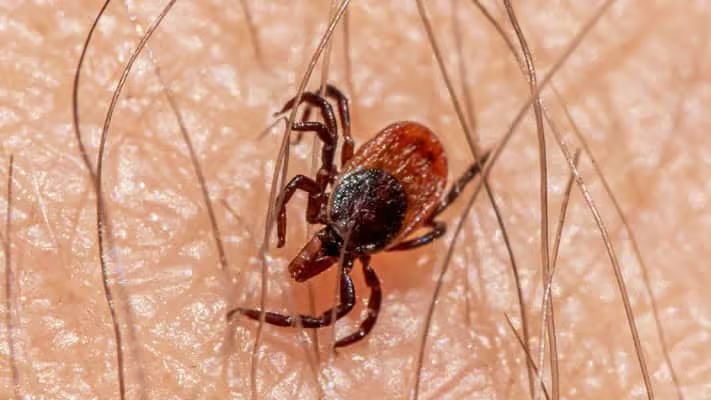
Ticks are blood-feeding arachnids that wait on grass, brush, and leaf litter for a person or animal to brush past—a behavior called questing. They are not insects, they do not fly, and they do not jump like fleas, but they are extremely effective at finding hosts along woodland edges, overgrown fence lines, and trails through tall vegetation. Several species found in residential settings, including blacklegged (deer) ticks and American dog ticks among others depending on region, can transmit serious diseases. If you are searching for how to get rid of ticks in your home, you are usually dealing with yard and landscape habitat more than a classic indoor “infestation,” plus pets that carry ticks onto carpets and furniture.
This guide is written from a practical treatment perspective—the same framework a Pest Control Company company uses when evaluating tick activity. You will learn how ticks typically establish around residential properties, what light DIY steps can work for early or limited pressure, which treatment methods actually reduce yard populations, what often goes wrong with one spray and no habitat work, and when it is smarter to bring in a licensed technician. You will also see what a Pest Control Company tick service looks like from inspection through seasonal barrier programs, how to choose a good provider, and how to prevent ticks from rebounding after landscaping grows back.
Use this page as a decision guide. If activity is light, your yard is open and well maintained, and pets are on prevention, the DIY section may meaningfully reduce risk. If you live against wooded edges, have heavy leaf litter and brush, find ticks on people or pets repeatedly, or want a structured perimeter program timed to peak season, treat this guide as your bridge to Pest Control Company help—and to platforms like Pest Direct that connect homeowners with local pest control companies ready to inspect and quote the job.
How Ticks May Have Gotten Into Your Home
Tick problems around homes almost always begin outdoors. Ticks thrive where hosts (deer, rodents, birds, pets, people) overlap with humid, sheltered vegetation: woodland edges, tall grass, brush piles, stone walls with leaf litter, groundcover, and unmaintained fence lines. They climb low vegetation and extend their front legs to hitch a ride. Once on a pet or pant leg, they crawl upward to find a feeding site. Indoors, ticks arrive primarily as hitchhikers on animals and clothing—not because a colony lives in the couch the way fleas colonize carpet. Still, a tick that drops indoors can be found on floors, bedding, or furniture, which is why homeowners experience them as a “home” problem.
Pets are major transport vectors. Dogs and outdoor cats patrol the same edge habitats ticks prefer and carry unattached or feeding ticks into living rooms. Wildlife traffic—deer bedding near yards, rodent runs along foundations, bird activity in brush—keeps reintroducing ticks even after a single yard spray. Firewood stacks, play structures at the woods’ edge, and paths that cut through tall grass increase human encounter rates. Seasonal peaks vary by species and life stage (larvae, nymphs, adults); nymphal blacklegged ticks, for example, are tiny and easy to miss during spring and early summer in many regions.
Moisture and shade matter. Closely mowed, sunny lawn centers are usually lower risk than damp, leaf-covered borders. Understanding how ticks arrived is not academic—it tells you whether the fix is pet prevention and clothing checks, creating a wood-chip barrier at the lawn-woods edge, treating perimeter vegetation, reducing rodent harborage, or building a Pest Control Company seasonal program for high-risk lots.
How to Treat a Tick Problem in Your Home
Effective tick treatment is not about fogging the living room. The goal is to reduce questing habitat and tick density in the yard zones people and pets use, protect pets with veterinary products, practice personal protection and tick checks, and apply targeted residuals to perimeter vegetation when appropriate. Pest Control Companies think in systems: map high-risk edges, modify habitat, treat transition zones between lawn and woods, coordinate pet prevention messaging, and schedule seasonal applications when tick stages are active.
Finding one tick after a hike is a different job than weekly ticks on dogs, kids’ play areas against brush, and a deep wooded boundary. Match the intensity of treatment to property risk and encounter frequency. Below is how to approach light DIY control, the main treatment methods used in residential work, and the failure modes that leave families exposed all season.
Treating Light Tick Problems Yourself
If you have only recently found occasional ticks, start with habitat and host protection before assuming you need whole-yard chemicals. Keep grass mowed, remove leaf litter from lawn edges and play areas, pull brush back from paths, and stack wood neatly away from the house. Create a clear transition—many experts recommend a barrier of wood chips or gravel between lawns and wooded areas—to reduce tick migration into recreation space. Discourage deer where practical and legal; reduce rodent harborage by sealing gaps and tidying debris piles.
Put pets on veterinarian-recommended tick prevention appropriate for your region and animal. After outdoor time, perform tick checks on people and pets—especially waistbands, sock lines, hairlines, armpits, and ears of animals. Shower within a couple of hours of potential exposure when possible, and tumble-dry clothes on high heat when appropriate to kill hitchhikers. Use EPA-registered repellents on skin and consider permethrin-treated clothing for high-risk activities following product directions.
Consumer yard sprays exist, but coverage, timing, and safety around pollinators and water features require careful label reading. If encounters remain rare after habitat cleanup and pet prevention, you may manage risk without a service contract. If ticks keep appearing on pets or people, if your lot borders heavy woods, or if disease risk in your area is high and outdoor use is daily, escalate to Pest Control Company perimeter programs rather than hoping mowing alone is enough.
What Can Go Wrong If Tick Problems Are Handled Poorly
The most frequent failure is spraying once while leaf litter, tall edge grass, and untreated pets immediately reseed risk. Another is focusing only indoors—spraying baseboards for a hitchhiker problem that lives in the woods edge. Ignoring nymph season, when ticks are tiny and easy to miss, creates a false sense of safety after adult ticks become less obvious.
Incorrect tick removal (harsh chemicals, burning, squeezing the body) can increase irritation or leave mouthparts; steady fine-tipped tweezers at the skin line are the standard advice from health authorities. Delaying medical attention when rash, fever, or flu-like symptoms follow a bite is a health failure mode beyond pest control. Overgrown play areas against brush without any barrier put children at avoidable risk.
DIY overapplication of pesticides near waterways or blooming plants can harm non-targets without solving edge habitat. In shared or HOA landscapes, treating one yard while communal paths stay overgrown limits results. The longer high-risk vegetation and host traffic continue without a plan, the more encounters accumulate across a season—and the more families rely on luck instead of layered protection.
Treatment methods
The approaches a technician chooses between for ticks, and what each one is good at.
- Risk assessment and habitat mapping
- Technicians inspect lawn-woods edges, fence lines, play areas, pet runs, stone walls, groundcover, and leaf litter zones. They note deer and rodent signs and where family activity overlaps high-risk vegetation. Mapping focuses treatment on transition zones rather than pointless spraying of sunny open lawn centers. Skipping assessment wastes product and misses the true encounter paths.
- Habitat modification and landscape management
- Mowing, litter removal, brush clearing, and dry barriers between recreation lawn and woods are foundational. Sunlight and dryness reduce tick survival compared with shaded, humid leaf litter. Pest Control Companies often prescribe homeowner landscape tasks alongside chemical barriers. Habitat work without any product can still lower risk substantially on moderate lots.
- Targeted perimeter and vegetation treatments
- Residual applications along wooded edges, fence lines, ornamental plantings, and other questing zones reduce tick numbers where hosts brush past. Treatment timing should align with local tick activity patterns. Broadcast spraying of entire open lawns is often less useful than precise edge work. Label compliance around water, blooming plants, and pets matters.
- Pet-focused coordination
- Because pets import ticks, on-animal prevention is non-negotiable for household success. Pest control addresses the yard; veterinarians guide pet products. Multi-pet homes need complete coverage. Treating the yard while dogs run untreated through brush is a classic failure mode Pest Control Companies will flag during inspection interviews.
- Rodent and wildlife pressure reduction
- Rodents are important hosts for immature ticks in many systems. Reducing harborage, sealing structures, and managing feed that attracts wildlife can lower local tick amplification. Deer management is community-scale and limited for individual homeowners, but plant choice and fencing sometimes help. Integrated advice beats chemical-only thinking.
- Seasonal programs and personal protection education
- Tick risk is seasonal and species-specific. Recurring perimeter service through active months, combined with homeowner tick checks and repellent use, produces better outcomes than a single spring spray. Follow-up visits adjust for vegetation regrowth and weather. Education on correct tick removal is part of a complete program—not a substitute for medical care when symptoms appear after a bite.
When You Should Call a Pest Control Company for Ticks
Call a Pest Control Company when ticks are found repeatedly on pets or people despite mowing and basic prevention, when your property borders woods or heavy brush, or when you want a scheduled perimeter program through peak tick season. Call if leaf litter and edge habitat are extensive, if children play daily near vegetation borders, or if local tick-borne disease risk makes proactive yard management a household priority.
You should also call if previous DIY yard products failed, if the lot is too large or complex for consistent homeowner treatment, or if you need help prioritizing which landscape zones matter most. Pest Control Companies are not only for “rural estates”; suburban wooded lots are classic high-yield service settings. A spring inspection timed before peak outdoor activity can prevent a summer of constant tick checks.
If someone develops symptoms after a tick bite—expanding rash, fever, joint pain, severe headache—contact a medical Pest Control Company promptly. Pest control reduces future encounters; it does not treat disease. Save the tick in a sealed container for identification if guidance in your area recommends it, but do not delay care while waiting on pest service.
Why a Pest Control Company Is Often Better Than DIY Alone for Ticks
Pest Control Companies bring three advantages homeowners rarely match: edge-focused treatment design, product selection and timing aligned with tick biology, and integration of habitat recommendations with optional seasonal service. They know that open lawn centers are not the main battlefield and that vegetation regrowth undoes a single afternoon of spraying. They can cover fence lines and wooded transitions more thoroughly than most homeowners with consumer equipment.
Personal protection, pet prevention, and landscape hygiene remain essential even with pros on site. Retail tools help light risk, but labels, time, and access constraints limit consistent DIY results on large or complex lots. Pros use integrated methods—mapping, perimeter residuals, habitat coaching, and revisit schedules—instead of a one-time fog mindset borrowed from other pests. They also communicate realistic expectations: no yard is sterilized of every tick forever when wildlife corridors remain.
There is also a peace-of-mind calculation. Fear of disease, constant pet combing, and restricted yard use add stress. A structured service plan converts that anxiety into layers: maintain the lawn edge, treat the transition zone, protect pets, check bodies, and reapply on schedule. For many households, that reliability is the real product. Pest Control Company service is not about “giving up”; it is about matching tools to a pest tightly linked to landscape ecology and host movement.
What the Pest Control Company Treatment Process Looks Like for Ticks
While companies vary, high-quality residential tick control follows a predictable arc. Understanding the process helps you evaluate quotes and avoid generic “spray the grass” services that ignore woods edges. Here is the typical sequence from first call to lasting risk reduction.
Inspection and risk-zone mapping
A technician interviews you about tick finds, pets, and outdoor use, then walks lawn edges, play areas, fence lines, and wooded borders. They identify priority treatment and landscape modification zones. Host animal signs and moisture conditions inform the plan.
Treatment plan and homeowner prep
You receive a plan that may include perimeter applications, recommendations for litter and brush removal, and a seasonal schedule. Prep might mean mowing, securing pets, and clearing access along fence lines. Clear division of company tasks versus homeowner habitat work is a good sign.
Initial perimeter treatment
The technician applies labeled products to designated vegetation and edge habitats—not necessarily every square foot of open lawn. Good techs explain drying times, what to expect, and why pet prevention and tick checks still matter after service.
Follow-up and seasonal reapplication
Because vegetation grows and tick stages peak at different times, follow-up visits are common. The technician reassesses pressure and retreats key zones. This is where DIY single sprays fail—there is no plan for mid-season rebound.
Ongoing prevention partnership
Long-term success includes landscape barriers, pet products, personal protection, and possibly continued seasonal service. Technicians may suggest changes to play areas or wood piles. The end state is fewer encounters in the spaces you actually use, not a mythical tick-free forest.
How to Find a Good Pest Control Company for Tick Control
A good tick control provider is licensed where required, carries insurance, and can explain perimeter and habitat strategy without promising zero ticks forever. Ask how they treat wooded edges versus open lawn, how often service runs in peak season, what they recommend for pets, and how they handle properties against heavy forest. Be cautious of quotes that only offer a quick blanket spray with no edge inspection.
Check recent reviews for mentions of reduced tick finds on pets, clear communication, and seasonal reliability. Ask about pet and child re-entry times, environmental precautions, and callbacks if activity continues. For disease-conscious households, ask whether technicians provide prevention education alongside treatment.
This is also where Pest Direct fits the homeowner journey. After you understand the problem from a guide like this, the next step is not guesswork with random yard products alone—it is connecting with local pest control companies that already service residential tick pressure. Pest Direct helps you move from reading about the problem to getting help: find Pest Control Companies in your area, compare options, and request service without guessing which random search result is legitimate. Use educational guides to know what “good” looks like, then use the platform to hire it.
When you request service, share details that speed diagnosis: lot description and wooded borders, pets and prevention products, where ticks have been found, children’s play zones, and any prior treatments. Better intake information produces better quotes and faster results.
How to Keep Ticks From Coming Back
Prevention is layered. Maintain mowed lawns, remove leaf litter from edges, keep playgrounds and patios set back from brush, and consider a wood chip or gravel barrier at the woods line. Stack firewood neatly and away from the house. Reduce rodent harborage and avoid feeding wildlife that increases host traffic.
Keep pets on year-round or season-appropriate veterinary tick prevention as directed. Perform tick checks after yard work and outdoor recreation. Use repellents and treated clothing when appropriate for hikes and heavy brush. Shower after high-risk exposure and dry outdoor clothes on high heat when suitable.
Think of prevention as shrinking the overlap between tick habitat and human or pet paths. You may never eliminate every tick in adjacent woods, but you can make the yard you live in far less welcoming and far less likely to deliver hitchhikers indoors. Pair landscape discipline with pet protection and early-season Pest Control Company help if your lot is high risk—and you stay ahead of the next peak.
Ticks treatment: common questions
What is the fastest way to get rid of ticks in the yard?
Mow and clear leaf litter at edges, protect pets with veterinary products, and apply targeted treatments to wooded transition zones—or hire a Pest Control Company perimeter program. There is no instant whole-forest fix. Personal tick checks remain essential even after treatment.
Do ticks live indoors like fleas?
Ticks do not typically establish breeding populations in carpet the way fleas do. Most indoor ticks are hitchhikers from outdoors on pets or clothing. Focus control on yard habitat and pet prevention, and inspect animals before prolonged indoor time.
How do I remove a tick correctly?
Use fine-tipped tweezers to grasp the tick close to the skin and pull upward steadily without twisting. Clean the area and your hands. Avoid petroleum jelly, heat, or crushing the body. Seek medical advice if symptoms develop after a bite.
When is tick season?
It depends on region and species; many areas see strong spring through fall activity with stage-specific peaks. Nymphs can be active when weather warms and are easy to miss due to size. Ask local providers about timing in your area.
Does Pest Control Company tick treatment eliminate disease risk?
Treatment reduces tick numbers and encounter odds but cannot guarantee zero risk while ticks and hosts exist nearby. Combine yard programs with pet prevention, repellents, and tick checks. See a doctor for post-bite symptoms.
Should I treat my whole lawn?
Often the highest value is at edges, fence lines, and shaded transition zones rather than open sunny turf centers. A Pest Control Company inspection targets where ticks actually quest along host paths.
Can landscaping really reduce ticks?
Yes. Sunlight, dryness, litter removal, and barriers between woods and lawn reduce tick-friendly microclimates. Landscape management is one of the most effective long-term tools alongside products and pet care.
Can Pest Direct help me find tick control near me?
Yes. Once you understand your tick problem, Pest Direct connects you with local pest control companies that handle residential tick service. Compare providers and request help without starting from zero.
Hand the ticks problem to someone licensed
Compare local pest control companies that treat ticks, see what they charge, and get an estimate.