
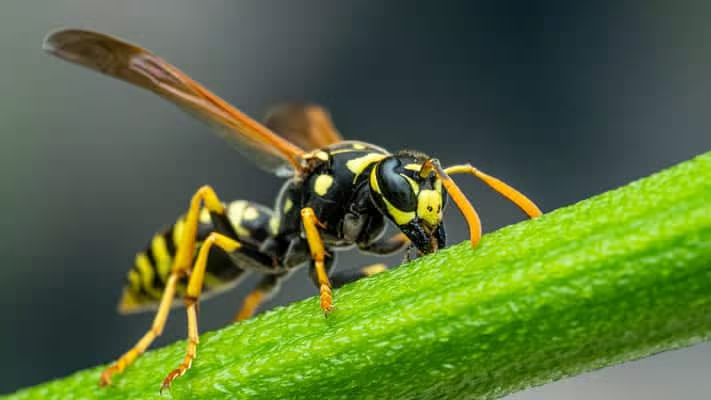
How to Get Rid of Wasps in Your Home: A Complete Treatment Guide
Wasps are among the most stressful pests homeowners face because the risk is immediate: stings, defensive swarms, and nests hidden under eaves, in wall voids, underground, or in trees next to play areas. Paper wasps, yellowjackets, and hornets are the groups most commonly encountered around residential structures. They are not the same as honey bees, and their nesting habits and temperaments differ from one another—which means the right response is not always “spray the first yellow insect you see.” If you are searching for how to get rid of wasps in your home, you are usually dealing with more than a single scout at a picnic. You are dealing with a colony that has found a nesting site near people.
This guide is written from a practical treatment perspective—the same framework a Pest Control Company company uses when evaluating wasp activity. You will learn how wasps typically establish around homes, what light DIY steps can work for very early or small exposed nests, which treatment methods actually eliminate colonies safely, what often goes wrong with consumer sprays and nighttime heroics, and when it is smarter to bring in a licensed technician. You will also see what a Pest Control Company wasp service looks like from inspection through nest removal, how to choose a good provider, and how to prevent new colonies from claiming the same sites next season.
Use this page as a decision guide. If activity is limited to a few wasps and a tiny, accessible paper nest you can treat safely at the right time of day with appropriate protective measures, light DIY may resolve it. If nests are large, hidden in walls or the ground, located high on the structure, near high-traffic areas, or associated with aggressive yellowjackets, treat this guide as your bridge to Pest Control Company help—and to platforms like Pest Direct that connect homeowners with local pest control companies ready to inspect and quote the job.
How Wasps May Have Gotten Into Your Home
Wasp problems around homes almost always begin with nest site selection in spring and early summer, when overwintered queens search for protected cavities and overhangs. Paper wasps favor eaves, porch ceilings, window frames, and open-sided structures where they build umbrella-shaped paper nests with exposed cells. Yellowjackets often nest in underground cavities, landscape voids, wall voids, attic edges, and hollow structural spaces—sometimes with only a small entrance hole visible. Hornets may build large enclosed paper nests in trees, shrubs, or on structures. Once a nest is established, foragers expand the colony through the warm months, peaking in late summer when stings become most common.
Wasps do not typically “infest” living rooms the way ants trail to sugar, but they do enter structures when nests are inside wall voids, attics, or soffits. Homeowners may hear buzzing in walls, see wasps emerging from weep holes, vents, or siding gaps, or find wasps indoors after workers lose their way from an interior nest. Open doors and windows during cookouts, sweet drinks, protein trash, and pet food also draw foraging wasps onto decks and into kitchens. Fallen fruit, uncovered garbage, recycling residue, and outdoor dining create strong attractants that increase traffic even when the nest is next door.
Landscaping and structure details multiply risk. Dense shrubs against the house hide early nests. Ground nests near walkways are easy to disturb with mowing and play. Roof and soffit gaps invite paper wasps and void-nesting yellowjackets. Previous year’s nest remnants can mark preferred sites, and queens often re-scout the same eaves and cavities. Seasonal pressure is intense in late summer: colonies are largest, food competition rises, and yellowjackets become more aggressive around human food. Understanding how wasps arrived is not academic—it tells you whether the fix is removing a small eave nest, treating a ground entrance, opening a wall carefully with Pest Control Company tools, or changing trash and landscape habits that keep foragers in your outdoor living space.
How to Treat a Wasp Problem in Your Home
Effective wasp treatment is not about swatting foragers at the grill. The goal is to locate the nest, apply the right product in a way that reaches the colony, wait until activity collapses, then remove the nest when safe—and reduce the conditions that invite next year’s queen. Pest Control Companies think in systems: identify the type of wasp, find the nest entrance, choose day-vs-night timing and access strategy, treat, verify knockdown, remove nest material, and seal or monitor preferred sites.
A thumbnail paper wasp nest under a quiet eave is a different job than a yellowjacket colony in a wall void behind a bedroom, a ground nest by a sandbox, or a large aerial hornet nest over a driveway. Match the intensity and caution of treatment to nest size, location, and species. Below is how to approach light DIY control, the main treatment methods used in residential work, and the failure modes that turn a manageable nest into a multi-sting emergency.
Treating Light Wasp Problems Yourself
If you have only recently noticed a few wasps and a small, fully visible paper nest in an easy-to-reach location with low foot traffic, limited DIY may be reasonable for some homeowners—provided you accept sting risk and follow product labels exactly. Work at dusk or night when most wasps are on the nest and less active, wear protective clothing that covers skin, keep children and pets indoors, and never stand directly under the nest flight path. Use a product labeled for wasps and hornets that can be applied from a safe distance, treat the nest thoroughly, then leave the area immediately. Do not seal nest entrances while live wasps are still active inside voids—that can force them into living spaces.
For foraging wasps without a known nest, start with sanitation: cover trash, clean outdoor eating areas, remove fallen fruit, and avoid open sweet drinks outdoors. Traps can reduce some foragers but will not eliminate a nearby nest. Do not attempt DIY treatment of large nests, ground nests with heavy traffic, nests inside walls, high nests requiring ladders under panic conditions, or any nest if you have a history of severe allergic reactions to stings—those situations belong to Pest Control Companies and, for medical risk, to your physician’s guidance on epinephrine and emergency planning.
If the nest is tiny, treated correctly, and activity stops within a day or two, remove the nest when you are sure it is inactive and monitor the site. If wasps continue emerging, if you never find the nest, or if activity increases after a partial spray, stop DIY attempts. Partial treatment often makes colonies more defensive.
What Can Go Wrong If Wasp Problems Are Handled Poorly
The most frequent DIY failure is daytime spraying of a large nest, which can provoke mass stinging and incomplete kill. Another is plugging entrance holes while a void colony is still alive, forcing wasps into bedrooms and living rooms. Using water hoses, throwing rocks, or “smoking them out” escalates danger without reliable control. Ladder work under active aerial nests without protection leads to falls and multiple stings.
Misidentification matters. Treating honey bees as if they were yellowjackets can destroy pollinators and may have legal or neighbor implications in some areas; when bees are involved, specialized removal may be appropriate. Partial treatment that angers a colony near a school bus stop or patio creates liability and injury risk. Delaying action until late summer means larger colonies, more defensive behavior, and harder, more expensive service.
Allergic reactions—including anaphylaxis—are a medical emergency. DIY heroics by someone with known severe allergy, or treatment near highly sensitive household members without a plan, is an unacceptable risk. Overreliance on traps while a nest thrives on the structure wastes weeks. In multi-unit properties, treating only one unit’s eaves while a shared void nest continues can leave neighbors exposed. Poor handling turns a solvable nest into an emergency room visit and a much larger service call.
Treatment methods
The approaches a technician chooses between for wasps, and what each one is good at.
- Nest location and species identification
- Successful control starts with finding the nest and knowing whether you face paper wasps, yellowjackets, or hornets. Inspection includes eaves, soffits, porch ceilings, sheds, playground equipment, trees, ground holes, siding gaps, attic edges, and areas where flight paths concentrate. Species type predicts nest architecture, aggression, and the best approach. Treating random foragers without locating the colony is the most common reason DIY efforts fail all summer.
- Directed nest treatment with labeled insecticides
- Pest Control Companies apply wasp and hornet products—often aerosols with jet reach, dusts for voids, or other labeled formulations—directly to the nest or nest entrance so the colony receives a lethal dose. Timing is typically evening or night for many jobs. Protective equipment, ladders, and access tools allow treatment of sites homeowners should not attempt. The point is colony kill, not a dramatic cloud of spray that misses the comb.
- Void and wall-nest strategies
- When yellowjackets or other wasps nest in wall voids, attics, or hollow structures, dusts or specialized applications into the entrance and void may be required. Sealing too early can drive wasps into living areas. After activity ceases, technicians may recommend removal of nest material where accessible and sealing of entry points to prevent reuse. Void work is a primary reason Pest Control Company service is safer than consumer experimentation.
- Ground nest and landscape treatments
- Ground-nesting yellowjackets require careful entrance treatment and clear exclusion of people and pets from the area until knockdown. Mowing and play near untreated ground nests are common sting triggers. Pest Control Companies mark and treat entrances, verify reduction, and advise on site monitoring. Landscape clutter and rodent burrows that provide cavities may be noted as long-term risk factors.
- Nest removal after knockdown
- Once the colony is dead or fully inactive, physical nest removal reduces reattraction, debris, and secondary pest issues. Exposed paper nests under eaves are typically scraped away; void nests may only be partially accessible. Removal without prior treatment of an active colony is dangerous and should not be attempted casually. Pros sequence kill first, remove second.
- Exclusion, sanitation, and seasonal monitoring
- Long-term success includes sealing preferred cavities after nests are inactive, screening vents properly, managing trash and fruit attractants, and checking eaves early in spring for founding queens and tiny starter nests. Early-season removal of small nests is far safer than late-summer war with a mature colony. Integrated follow-up may include a revisit if satellite activity or a second nest appears.
When You Should Call a Pest Control Company for Wasps
Call a Pest Control Company when nests are large, high, underground, inside walls or attics, or located where children, pets, or guests frequently walk. Call immediately if wasps are emerging from siding, electrical fixtures, or interior rooms, or if anyone in the household has a history of severe allergic reactions to stings. Aggressive yellowjacket activity around trash, parties, or play areas—even if you cannot see the nest—is another clear trigger for inspection.
You should also call if a DIY attempt failed, if the nest is bigger than a few inches, or if you need ladder access that feels unsafe. Pest Control Companies are not only for “huge” nests; they are for any situation where the cost of a mistake is multiple stings. A same-day or same-week service call during peak season can prevent a backyard event from becoming a crisis.
If someone is stung and shows signs of a severe allergic reaction—difficulty breathing, swelling of face or throat, dizziness, widespread hives—call emergency medical services first. Pest control comes after medical stability. For non-emergency nest control, do not wait for the colony to peak if you already know the nest location.
Why a Pest Control Company Is Often Better Than DIY Alone for Wasps
Pest Control Companies bring three advantages homeowners rarely match: safe access and protective equipment, products and techniques designed for nest-level kill (including voids), and judgment about timing and sealing. Finding a ground entrance or tracing flight paths to a soffit gap is a trained skill. So is deciding when dusts are appropriate versus jet aerosols, and when not to seal an active void.
Retail wasp sprays can work on small exposed paper nests when used exactly as labeled, but they are a poor match for mature colonies, hidden nests, and high structural work. Pros sequence treatment and removal correctly, reduce re-sting risk to the household, and can address multiple nests on one property. They also know regional patterns—when yellowjackets surge, where paper wasps prefer local architecture, and how to communicate re-entry and yard-use restrictions after treatment.
There is also a time, safety, and stress calculation. One emergency department visit or one swarm event at a child’s party outweighs the cost of Pest Control Company nest treatment many times over. A structured service converts uncertainty into a plan: locate, treat, verify, remove, and prevent. Pest Control Company service is not about “giving up”; it is about matching tools and safety protocols to stinging insects that evolved to defend their colonies vigorously.
What the Pest Control Company Treatment Process Looks Like for Wasps
While companies vary, high-quality residential wasp control follows a predictable arc. Understanding the process helps you evaluate quotes and avoid vague “spray the yard” services that never address the nest. Here is the typical sequence from first call to lasting control.
Inspection and nest location
A technician interviews you about sting incidents, flight paths, and where wasps are seen, then inspects eaves, voids, ground areas, trees, trash zones, and interior rooms if wasps have been inside. They identify likely species and mark nest entrances. Safety zones for pets and people are discussed before any product is applied.
Treatment plan and site prep guidance
You receive a plan that may include evening treatment, void dusting, aerial nest application, or ground entrance treatment. Prep might mean keeping windows closed, securing pets, clearing patio furniture from the work zone, or avoiding a yard area until cleared. Clear instructions are a sign of a careful company.
Nest treatment
The technician applies labeled products to the nest or entrance using appropriate equipment and PPE. Good techs explain what they are doing, expected knockdown timing, and whether nest removal will occur same visit or after activity stops. You should know when it is safe to use the area again.
Verification and nest removal
After activity collapses, remaining nest material is removed when accessible. Persistent activity triggers retreatment or further inspection for a second nest. This verification step is where DIY often fails—people assume silence means success when foragers are still using a secondary entrance.
Prevention and seasonal recommendations
Technicians may recommend sealing cavities after inactivity, screening, trash management, and early-spring monitoring for new queens. Some properties benefit from periodic exterior inspections during wasp season. The end state is fewer preferred nest sites and fewer attractants, not only one dead nest today.
How to Find a Good Pest Control Company for Wasp Control
A good wasp control provider is licensed where required, carries insurance, and can explain nest-finding and safety procedures without bravado. Ask how they handle wall voids and ground nests, whether evening service is available, and whether nest removal and follow-up are included. Be cautious of quotes that only offer a generic yard spray with no nest inspection story.
Check recent reviews for mentions of response time (critical in sting season), thoroughness, and whether wasps actually stopped. Ask about pet safety, yard re-entry times, and what happens if activity continues. For allergic household members, communicate that risk clearly when booking so the company can prioritize and plan.
This is also where Pest Direct fits the homeowner journey. After you understand the problem from a guide like this, the next step is not a risky ladder climb at dusk with a store-bought can—it is connecting with local pest control companies that already handle stinging insect nests. Pest Direct helps you move from reading about the problem to getting help: find Pest Control Companies in your area, compare options, and request service without guessing which random search result is legitimate. Use educational guides to know what “good” looks like, then use the platform to hire it.
When you request service, share details that speed diagnosis: nest photos and location, height and access constraints, whether wasps are coming from walls or the ground, recent sting incidents, and any allergy concerns. Better intake information produces faster, safer service.
How to Keep Wasps From Coming Back
Prevention focuses on denying queens easy nest sites and reducing forager rewards. In early spring, walk eaves, porch ceilings, sheds, and play structures weekly and address thumbnail starter nests before they grow. Seal gaps in soffits, siding, and unused conduits after you are sure no live colony remains inside. Screen vents properly without creating new moisture problems.
Manage attractants: keep outdoor trash tightly covered, rinse recyclables, pick up fallen fruit, cover compost correctly, and clean grills and outdoor dining areas. Avoid leaving pet food outdoors. During late summer, be especially careful with sweet drinks and proteins at outdoor events. Trim vegetation that hides early nests against the structure, and fill ground voids that are not needed for drainage or utilities when appropriate.
Think of prevention as lowering the odds that a queen chooses your eaves and that foragers treat your patio as a cafeteria. You may not eliminate every wasp in the neighborhood, but you can make your structure a poor nesting choice and your outdoor living areas less rewarding. Pair early-season monitoring with rapid response to the first small nest, and you avoid the late-summer mega-colony cycle.
Wasps treatment: common questions
What is the fastest way to get rid of wasps around the house?
Locate and treat the nest with a labeled product at the correct time of day, or hire a Pest Control Company for large, high, ground, or void nests. Killing individual foragers does not eliminate the colony. Sanitation reduces traffic but will not replace nest treatment.
Why are wasps more aggressive in late summer?
Colonies are largest then, natural food sources shift, and yellowjackets especially compete for sweets and proteins near people. More wasps plus more human outdoor activity equals more defensive encounters. Early nest control prevents peak-season pressure.
Can I remove a wasp nest myself during the day?
Daytime disturbance of an active nest is a common cause of multiple stings. If you attempt any DIY treatment at all, dusk or night is usually safer, and only for small exposed nests. When in doubt, hire a Pest Control Company.
What if wasps are nesting inside a wall?
Do not seal the entrance while the colony is alive. Void nests need Pest Control Company treatment strategies, and premature sealing can drive wasps indoors. Call a licensed technician experienced with structural nests.
Are wasp traps enough to solve a nest problem?
Traps may catch some foragers but rarely eliminate a established colony on or under your structure. Use traps as a minor supplement at most; focus on nest location and treatment for real control.
How long after treatment until wasps are gone?
Many treated nests show sharp activity drops within 24 hours, but verification over a few days is wise. Large or void nests may need follow-up. Your technician should set expectations based on nest type and access.
What is the difference between wasps, hornets, and bees?
Wasps and hornets are typically smoother-bodied and more defensive around nests; honey bees are fuzzier and usually less aggressive away from the hive. Correct ID matters for treatment approach and for whether specialized bee removal is appropriate.
Can Pest Direct help me find wasp control near me?
Yes. Once you understand your wasp problem, Pest Direct connects you with local pest control companies that handle residential wasp and stinging insect service. Compare providers and request help without starting from zero.
Hand the wasps problem to someone licensed
Compare local pest control companies that treat wasps, see what they charge, and get an estimate.