Termites
Termites are wood-destroying insects that feed silently within structures, causing costly damage that often goes unnoticed until it is severe.
How Did I Get Termites??
Termites do not hitchhike into a home the way many other pests do—they find your property because it offers wood, moisture, and soil contact. Subterranean termites live in underground colonies and build mud tubes from the soil up to framing, sill plates, and other cellulose sources. Homes with wood-to-soil contact, poor drainage, clogged gutters, or damp crawlspaces create ideal foraging conditions.
Drywood termites take a different path. Swarmers can fly to your property, enter through attic vents, window frames, or exterior wood, and establish colonies entirely inside the wood they infest without needing soil contact. Firewood stacked against the house, wooden planters, stumps, and landscape timbers can also support nearby colonies that later expand toward the structure.
Most homeowners never “invite” termites in a deliberate way. Age of the home, climate, nearby tree roots, and moisture history matter more than day-to-day housekeeping. Because termites avoid light and open air while they feed, an infestation can develop for months or years before anyone notices damage.
How to identify termites
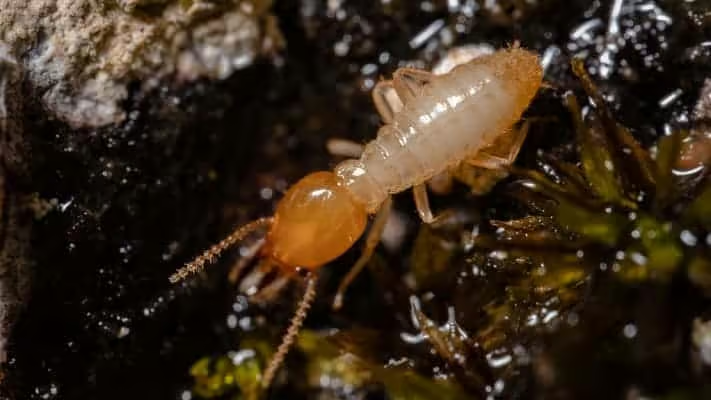
Termite swarmers are pale with straight antennae, equal-length wings, and a broad waist (unlike ants); workers are cream-colored and soft-bodied and are rarely seen outside damaged wood or mud tubes.
Known species and subtypes
- Subterranean TermiteReticulitermes spp.The most damaging and common termite type in the U.S., living in underground colonies and building mud tubes to reach wood.
- Drywood TermiteIncisitermes spp.A termite that lives entirely within dry wood without soil contact, common in warmer coastal regions.
- Formosan TermiteCoptotermes formosanusAn aggressive, invasive subterranean termite capable of forming unusually large, fast-growing colonies.
Signs of a Termite Infestation
Pencil-width mud tubes on foundations, crawlspace walls, or pier supports are one of the clearest signs of subterranean termites. You may also find discarded wings near windows, doors, and light fixtures after a spring or summer swarm. Wood that sounds hollow when tapped, blistered or bubbling paint, and sagging floors or sticky doors can indicate structural feeding behind the surface.
Drywood termites leave piles of sand-like fecal pellets (frass) near kick-out holes in furniture, window sills, or attic wood. Swarmers themselves look pale with straight antennae, equal-length wings, and a broad waist—features that help distinguish them from flying ants. Workers are cream-colored and soft-bodied and are rarely seen outside damaged wood or mud tubes.
Because termite damage is progressive and often hidden, any combination of tubes, wings, hollow wood, or unexplained structural changes deserves prompt inspection. Early detection is especially important: standard homeowners insurance typically excludes termite damage, so waiting can become a costly repair problem rather than a simple pest issue.
Where Do Termites Hide?
Subterranean termites hide in soil colonies and travel through mud tubes into foundations, crawlspaces, basements, wall voids, and any wood in contact with moisture or the ground. They commonly attack sill plates, joists, subfloors, and framing near bathrooms or exterior doors where water has damaged wood. Tubes may run along foundation walls, piers, and utility penetrations.
Drywood termites live entirely within the wood they infest—window and door frames, attic framing, furniture, and other dry timber. Their galleries stay sealed from view, so activity is easy to miss until pellets appear or wood fails. Firewood, mulch, stumps, and wooden debris near the structure can harbor or support nearby populations that threaten the home.
A thorough termite inspection covers both the exterior perimeter and high-risk interior areas: crawlspaces, basements, foundation edges, and moisture-prone framing. Homeowners often cannot see active galleries without tools and training, which is why Pest Control Company inspections remain the standard for reliable detection.
Foundation
commonThe base structure of the home, where cracks and gaps give pests direct access indoors.
Walls
commonInterior and exterior wall voids that give pests hidden travel routes and nesting space throughout the structure.
Crawlspace
commonA low, enclosed void beneath the home that provides dark, moist harborage for pests.
Basement
occasionalA below-grade space that is often damp and dark, making it attractive to a wide range of pests.
Firewood
occasionalStacked firewood that commonly harbors wood-boring insects, ants, and spiders close to the home.
Why Are Termites Bad for My Home?
Termites feed continuously on cellulose, hollowing out structural wood from the inside while leaving a thin shell that looks intact from the outside. Over months or years, that feeding can weaken floors, walls, supports, and other load-bearing members. Repairs after a long-undetected infestation can run into thousands of dollars, and the damage is usually not covered by standard homeowners insurance.
Unlike many household pests, termites do not create an obvious mess or odor in the living space. That silence is part of the risk: by the time floors sag or paint blisters, the colony may already be well established. Subterranean species can reinfest if soil barriers or bait systems fail; drywood colonies can expand through connected wood members if left untreated.
Ignoring early signs almost always costs more later. Treating a small, confirmed problem is far less disruptive than major structural repair after years of hidden feeding. Regular inspections and moisture control are the best defense against expensive surprises.
| Concern | Severity | What it means |
|---|---|---|
| Structural DamagePrimary | critical | Damage pests cause to the building's structural components, weakening its integrity over time. |
| Wood Damage | critical | Damage pests cause by tunneling through or consuming wood framing, trim, or furniture. |
| Property Damage | high | General damage pests cause to belongings, storage, or the surrounding property. |
What termites put at risk, and how urgent each one is.
How Do I Get Rid of Termites?
Termite control is not a job for general household sprays. For subterranean termites, Pest Control Companies typically install liquid soil termiticide barriers, in-ground bait stations, or a combination of both, then monitor the property over time. The goal is to stop foragers from reaching the structure and, with baits, eliminate or suppress the colony.
Drywood termites may require localized wood treatments, heat, or whole-structure fumigation depending on how widespread the infestation is. Spot treatments work for limited activity; larger colonies often need more comprehensive methods. Moisture correction, removing wood-to-soil contact, and clearing stumps and wood debris support any chemical or bait program.
Homeowners can help by scheduling inspections, fixing drainage issues, and keeping firewood and wooden debris away from the foundation—but elimination of an active infestation should be handled by a licensed termite Pest Control Company. DIY products rarely reach hidden galleries or soil colonies and can create a false sense of security while damage continues.
Methods, what a professional visit looks like, and what goes wrong when termites are treated the wrong way.
When Should I Call a Pest Control Company for Termites?
Call a Pest Control Company as soon as you see mud tubes, discarded wings indoors, hollow-sounding wood, or unexplained structural changes. You should also schedule an inspection before buying or selling a home, after flooding or major moisture events, and on a regular cycle in termite-prone regions even when no signs are obvious.
Do not wait for widespread damage. Termites work out of sight, and early treatment almost always costs less than delayed repair. A trained inspector can identify subterranean versus drywood activity, map risk areas around the foundation and crawlspace, and recommend a treatment and monitoring plan suited to the species.
Ask for a written finding, a clear treatment method, and an ongoing inspection or warranty schedule. Effective termite service is both a treatment event and a long-term protection plan, not a one-time surface spray.
Termites: common questions
How do I know if I have termites or flying ants?
Termite swarmers have a broad waist, straight antennae, and two pairs of equal-length wings. Flying ants have a narrow waist, elbowed antennae, and front wings longer than the hind wings. Capturing a specimen or clear photo helps a Pest Control Company confirm identification quickly.
Do termites damage homes quickly?
Termites feed continuously, but visible structural failure can take months or years depending on colony size, species, and wood moisture. Damage often stays hidden until wood is already weakened. Regular inspections catch problems before repairs become extensive.
Will homeowners insurance cover termite damage?
Standard homeowners policies typically exclude termite damage because it is considered preventable maintenance rather than a sudden covered event. Confirm with your insurer, but plan on prevention, inspection, and treatment as your primary protection.
How often should I get a termite inspection?
Annual Pest Control Company inspections are common in termite-prone areas, and many treatment warranties require scheduled monitoring. Buyers and sellers should always request an inspection as part of real estate transactions. Homes with past moisture issues may need more frequent checks.
Can I treat termites myself with store-bought products?
Consumer sprays rarely reach soil colonies or drywood galleries and can leave the infestation active while damage continues. Effective control usually requires soil barriers, bait systems, or specialized wood treatments applied by licensed Pest Control Companies. DIY efforts are better limited to moisture and wood-contact prevention.
What attracts termites to a house?
Wood-to-soil contact, excess moisture, poor drainage, stumps, mulch against the foundation, and cellulose debris all increase termite pressure. Subterranean termites follow soil moisture toward structures; drywood swarmers seek unprotected wood. Reducing those conditions lowers risk but does not replace Pest Control Company protection where activity exists.
Get termites help near you
Search local, licensed pest control companies by ZIP code.
Looking for a specific service? Browse termite treatment companies.