Bees
Bees are pollinating insects that occasionally nest in structures and can sting when their colony is threatened.
How Did I Get Bees??
Bees arrive at a structure when they find a suitable nesting cavity, food resources, or exposed wood for solitary species. Honeybee swarms may move into wall voids, chimneys, attics, or roof gaps after leaving a previous colony. Once established, a hive can expand inside the void and produce substantial honeycomb over time.
Carpenter bees behave differently: females bore round holes into unfinished or weathered wood on eaves, fascia, decks, siding, and outdoor furniture to create galleries for their young. Bumblebees may nest in abandoned rodent burrows, compost, or insulated voids. Flowering landscaping and nearby trees increase foraging traffic around the property even when the nest is not on your house.
Most bee problems are about nesting opportunity rather than sanitation. Unsealed siding gaps, open soffits, unscreened vents, and bare softwoods invite colony establishment. Early-season activity at a single hole or gap is the best time to intervene before a large colony develops.
How to identify bees
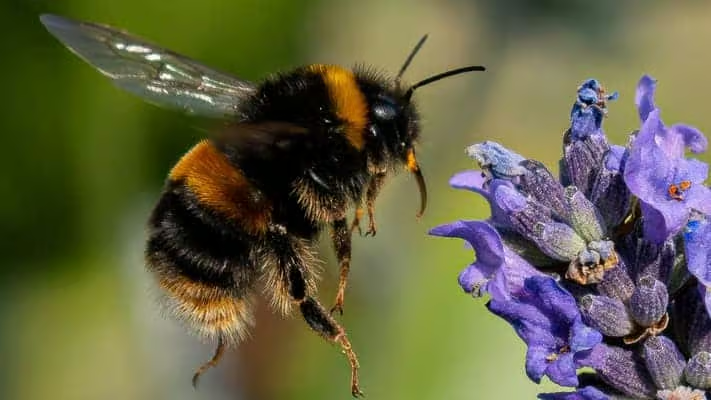
Honeybees are fuzzy, golden-brown to black, and slightly smaller than bumblebees, which are large, rounded, and densely covered in black-and-yellow hair; carpenter bees resemble bumblebees but have a shiny, hairless abdomen.
Signs of a Bee Infestation
Steady bee traffic in and out of a gap in siding, eaves, a chimney, or a roof line is a classic sign of a structural colony. You may hear buzzing from within a wall or attic void. Honeybee nests can eventually leave honeycomb residue, staining, or secondary pest activity if comb is abandoned and ferments.
Carpenter bees leave neatly round holes about the diameter of a pencil in exposed wood, often with sawdust-like frass below. Males may hover aggressively near decks and eaves even though they cannot sting. Bumblebees show heavier, fuzzier bodies and may nest closer to ground level in soil cavities or insulated spaces.
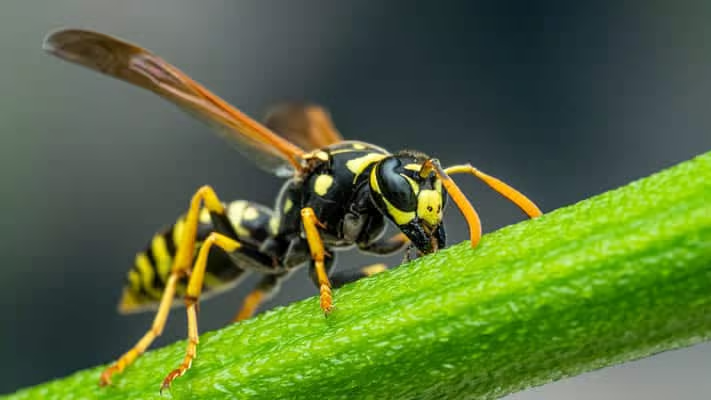
Distinguish bees from wasps when possible: honeybees and bumblebees are fuzzy pollinators, while many wasps have smoother bodies and different nest styles. Correct identification guides whether live removal, exclusion, or a different stinging-insect approach is appropriate.
Where Do Bees Hide?
Honeybees commonly nest in wall voids, attics, chimneys, roof intersections, and other protected structural cavities with a defensible entrance. From outside, you may only see a stream of bees using one gap in siding or trim. Inside, comb can extend through stud bays far beyond the entrance hole.
Carpenter bees nest in eaves, fascia boards, deck railings, siding, fences, and other soft or unfinished wood. Bumblebees prefer ground cavities, compost, dense grass clumps, or occasionally building insulation. Foragers are also abundant in gardens and flowering trees even when the nest is elsewhere on the property.
Never assume the nest is only as large as the visible entrance. Structural honeybee colonies in particular can be extensive, and incomplete treatment without comb removal can create odor and secondary pest problems later. Pest Control Company inspection maps the true nest location before action.
Walls
occasionalInterior and exterior wall voids that give pests hidden travel routes and nesting space throughout the structure.
Attic
occasionalAn upper void space that offers insulation, shelter, and quiet for nesting pests and wildlife.
Roof
occasionalThe uppermost structural surface, where damaged or open areas can let pests and wildlife into the attic.
Trees
commonLandscape trees that can host wood-boring pests or provide overhead cover near the home.
Siding
occasionalThe exterior wall covering, where gaps or damage can allow pests to enter wall voids.
Why Are Bees Bad for My Home?
Bees are valuable pollinators, but a colony inside a structure creates sting risk for anyone near the entrance, especially children and people with allergies. Honeybee colonies in walls can grow large, produce heavy comb, and attract curious pets or alarmed residents. Stings remain a serious medical concern for allergic individuals.
Carpenter bees cause cosmetic and progressive wood damage by boring galleries in eaves and decks. Repeated use of the same boards year after year can lead to more extensive tunneling and secondary invaders using old holes. Abandoned honeycomb left in voids can melt, stain interiors, ferment, and draw ants, cockroaches, or rodents.
The challenge is balancing ecological value with home safety. Ignoring a structural hive rarely ends well—colonies expand, and delayed comb removal becomes more invasive. Responsible control prioritizes safety and, when possible, live removal over indiscriminate destruction.
| Concern | Severity | What it means |
|---|---|---|
| StingsPrimary | moderate | Direct physical harm to people from pest stings, which can cause pain and localized or systemic reactions. |
| Venom | low | Risk of venomous injury from pests such as certain spiders, scorpions, or snakes. |
| Nesting | low | Pests establishing nests within or around the home, increasing the likelihood of a persistent infestation. |
What bees put at risk, and how urgent each one is.
How Do I Get Rid of Bees?
For honeybees, live capture and relocation by a beekeeper or a pest Pest Control Company partnered with one is often preferred when feasible. If relocation is not possible, structural treatment must be paired with removal of comb and proper sealing of the void—killing bees without removing honeycomb frequently leads to odor and secondary pests.
Carpenter bee management includes treating active galleries, plugging holes after activity stops, and painting or sealing exposed wood to deter future boring. Exclusion—screening vents, sealing siding gaps, and repairing rooflines—prevents honeybees and other cavity nesters from reentering. Do not casually seal an active entrance while a full colony is inside without a removal plan; trapped bees may force new exits into living spaces.
Because bee control is more sensitive than most pest work, Pest Control Company assessment is strongly recommended for structural colonies. Homeowners can help by noting entrance locations, avoiding disturbing nests, and scheduling service before peak colony size in warm months.
Methods, what a professional visit looks like, and what goes wrong when bees are treated the wrong way.
When Should I Call a Pest Control Company for Bees?
Call a Pest Control Company if bees are entering a wall, attic, chimney, or roofline; if you hear buzzing in voids; if someone in the home has a sting allergy; or if carpenter bee holes are multiplying across eaves and decks. You should also call for large swarms settling on the structure and for any nest near doors, play areas, or high-traffic walkways.
Pest Control Companies (and beekeepers when appropriate) can identify the species, evaluate live-removal options, and plan structural access for comb removal and exclusion. That expertise prevents the common DIY failure of treating adults while leaving comb and entry gaps behind.
If a sting causes severe allergic symptoms, seek emergency medical care first. For non-emergency nest situations, early Pest Control Company involvement is safer and usually less destructive than waiting until a colony fills a wall void.
Bees: common questions
Should bees be killed or relocated?
Honeybees are important pollinators, so live removal and relocation is preferred when a colony can be accessed safely. Structural constraints, safety risks, and species identification affect what is possible. A Pest Control Company can explain the best option for your specific nest.
Are carpenter bees dangerous?
Carpenter bees are generally less aggressive than social wasps, and males that hover near decks cannot sting. Females can sting if handled or threatened but rarely do so unprovoked. Their main impact is wood damage from nesting galleries in eaves, fascia, and decks.
Why are bees coming out of my wall?
A colony has likely established in a wall void and is using a siding gap, trim joint, or utility opening as an entrance. Continuous traffic at the same hole is a strong sign. Do not seal the hole while the colony is active without a removal and comb-extraction plan.
What happens if honeycomb is left in the wall?
Abandoned comb can melt in heat, stain interiors, produce strong odors, and attract ants, cockroaches, and other pests. That is why structural honeybee jobs should include comb removal and cleanup when possible. Sealing after full removal prevents recolonization of the same void.
How do I tell bees from yellowjackets?
Honeybees are fuzzy and golden-brown to black; yellowjackets are smoother with bright yellow-and-black banding and more aggressive scavenging at trash and outdoor food. Nest style also differs. Identification matters because control methods and ecological considerations are not the same.
Can I prevent bees from nesting in my house?
Seal gaps in siding, eaves, and chimneys, screen vents, and repair roofline openings before spring swarm season. Paint or seal exposed softwoods to deter carpenter bees. Early monitoring of eaves and previous nest sites stops small problems from becoming full structural colonies.
Get bees help near you
Search local, licensed pest control companies by ZIP code.
Looking for a specific service? Browse general pest control companies.