Boxelder Bugs
Boxelder bugs are seed-feeding insects that gather in large numbers on sunny walls and often invade homes seeking winter shelter.
How Did I Get Boxelder Bugs??
Boxelder bugs feed mainly on the seeds of boxelder, maple, and ash trees. Where those host trees grow near a home, outdoor populations can build through summer. As nights cool in fall, the bugs gather on the warmest, sunniest exterior walls—often south- or west-facing siding—and search for cracks that lead into wall voids, attics, and living spaces where they overwinter.
They do not need to nest or breed indoors to become a problem. Even a few small gaps around windows, doors, soffits, utility lines, and damaged screens are enough for dozens or hundreds of bugs to push inside on warm fall days. Homes with light-colored sun-exposed walls and nearby host trees tend to see the heaviest pressure.
Mild winters and warm spells can also bring overwintering bugs out of wall voids into rooms mid-season. The core issue is seasonal shelter-seeking, not indoor food sources or poor sanitation.
How to identify boxelder bugs
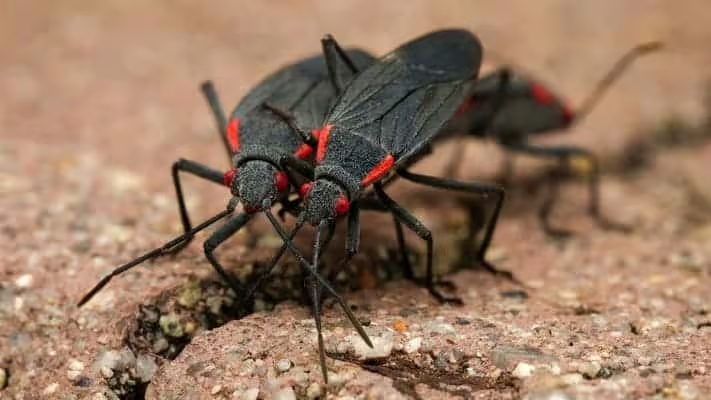
Adult boxelder bugs are about half an inch long with a black body and distinctive red-orange markings along the edges of their wings.
Signs of a Boxelder Bug Infestation
Large clusters of black insects with red-orange wing edges on sun-warmed exterior walls in late summer and fall are the classic sign. You may see them packed into corners of siding, window frames, door trim, and roof edges. Indoors, individual bugs appear on windowsills, curtains, and sunny glass as they try to move toward light.
Crushing them can leave reddish stains on fabrics and walls, and disturbed bugs may release a defensive odor. You might also notice live or dead bugs in light fixtures, attic edges, and along baseboards after a warm day wakes overwintering insects inside voids.
Boxelder bugs do not leave the trails or droppings typical of ants or roaches. Repeated seasonal clustering on the same walls, plus indoor sightings each fall and early spring, is usually enough to confirm the pattern.
Where Do Boxelder Bugs Hide?
Outdoors, boxelder bugs cluster on host trees, sunlit siding, window frames, and sheltered exterior corners. They squeeze into expansion joints, loose flashing, gaps behind trim, and spaces under shakes or siding. Any crevice that stays dry and protected can hold overwintering groups.
Indoors they do not establish breeding colonies. Instead they shelter in wall voids, attics, soffits, and behind baseboards, then wander into living areas when temperatures rise. Windows, sliding doors, and light-colored rooms often show the most activity because bugs move toward brightness and warmth.
Because so much of the population may sit inside exterior walls rather than on open floors, vacuuming visible insects helps comfort but does not empty the voids. Exclusion and fall perimeter treatment target the pathways and staging surfaces that feed indoor invasions.
Siding
commonThe exterior wall covering, where gaps or damage can allow pests to enter wall voids.
Windows
commonWindow frames and sills, common entry points for pests through small gaps and worn seals.
Attic
occasionalAn upper void space that offers insulation, shelter, and quiet for nesting pests and wildlife.
Trees
commonLandscape trees that can host wood-boring pests or provide overhead cover near the home.
Why Are Boxelder Bugs Bad for My Home?
Boxelder bugs do not bite, sting, or damage wood, wiring, or stored food. Their impact is a seasonal nuisance: large numbers on walls and windows, indoor invasions that feel endless on warm days, staining when crushed, and an unpleasant odor when bugs are disturbed in volume.
For some households the psychological stress of hundreds of insects appearing each fall is the real problem. Stains on curtains, upholstery, and light-colored walls can require cleaning, and dead insects collect in voids and fixtures over winter. Heavy outdoor clusters can also alarm guests and make outdoor living areas less usable.
Ignoring entry points year after year guarantees repeat invasions. While the bugs themselves are mostly harmless, the cycle continues until gaps are sealed and exterior pressure is reduced before they move inside.
| Concern | Severity | What it means |
|---|---|---|
| NuisancePrimary | moderate | General unwanted presence of pests that disrupts everyday life without a specific health or property impact. |
| Odor | low | Unpleasant smells caused by pest waste, nesting, or decomposing pests. |
What boxelder bugs put at risk, and how urgent each one is.
How Do I Get Rid of Boxelder Bugs?
Focus on exclusion and timing. Seal cracks around windows, doors, siding joints, soffits, and utility penetrations; repair screens; and add door sweeps where light shows under exterior doors. Vacuum indoor bugs rather than crushing them to limit stains and odor, and empty the vacuum outdoors.
In late summer or early fall—before large indoor migrations—perimeter insecticide applications on sun-exposed walls, window frames, and foundation edges can reduce the numbers that successfully move inside. Removing or reducing nearby female boxelder and related host trees is sometimes considered for extreme pressure, but exclusion remains the long-term foundation of control.
Indoors, residual sprays in living spaces have limited value because bugs are arriving from voids, not breeding on site. Pest Control Company fall treatments combined with sealing and vacuuming usually produce the best comfort through winter and early spring emergence.
Methods, what a professional visit looks like, and what goes wrong when boxelder bugs are treated the wrong way.
When Should I Call a Pest Control Company for Boxelder Bugs?
Call a Pest Control Company when large outdoor clusters appear each fall, when bugs repeatedly enter living spaces despite DIY sealing, or when you need timed exterior treatment before migration peaks. Pest Control Companies can identify high-pressure walls, treat staging surfaces correctly, and recommend exclusion upgrades that homeowners often miss at upper elevations.
You should also call if staining and odor are becoming a major issue, if attic or multi-story access is required, or if you want a preventive plan before the next cool season. Waiting until bugs are already inside in large numbers makes control more about cleanup than prevention.
Ask for a fall-focused plan that includes exterior treatment timing, sealing priorities, and guidance on vacuuming and indoor management so you know what results to expect through winter.
Boxelder Bugs: common questions
Do boxelder bugs bite or sting?
No. Boxelder bugs do not bite or sting people or pets. Their pincer-free mouthparts are used for feeding on plant seeds. The main problems are nuisance numbers, staining, and odor when they are crushed or disturbed.
Why are boxelder bugs only a problem in the fall?
They spend warm months feeding on host trees outdoors. Cooling temperatures push them to sun-warmed walls and indoor voids for winter shelter. That seasonal migration is why activity spikes in fall and sometimes again on warm late-winter days.
Will boxelder bugs reproduce inside my house?
They do not establish indoor breeding colonies. Bugs that enter are seeking shelter, not food or nesting sites for a new generation. Sealing entry points still matters because overwintering insects keep wandering into rooms from wall voids.
How do I remove boxelder bugs without staining walls?
Vacuum them and empty the canister or bag outdoors. Avoid crushing bugs on light fabrics and painted surfaces, since they can leave reddish stains and odor. Soapy water on outdoor clusters can help before bugs move indoors.
Do I need to remove my boxelder tree?
Not always. Many homes manage pressure with sealing and fall perimeter treatment even when host trees remain nearby. Tree removal or Pest Control Company landscape assessment is mainly considered when populations are extreme and other measures are not enough.
Why do I still see boxelder bugs in winter?
Warm spells wake bugs that are overwintering in attics and wall voids, and they move toward indoor light and heat. This does not mean a new outdoor invasion has started. Continued vacuuming and sealing reduce indoor sightings until spring.
Get boxelder bugs help near you
Search local, licensed pest control companies by ZIP code.
Looking for a specific service? Browse general pest control companies.