Scorpions
Scorpions are nocturnal arachnids found mainly in warmer, drier regions that deliver a painful and occasionally medically significant sting.
How Did I Get Scorpions??
Scorpions are nocturnal arachnids common in warmer, drier regions. They hide outdoors by day under rocks, woodpiles, debris, and landscaping and become active at night hunting insects and other small prey. Homes near desert habitat, rocky yards, or cluttered exterior storage see more activity.
Scorpions enter structures through small gaps around doors, utility penetrations, foundation cracks, and poorly sealed garages while foraging or escaping extreme heat or cold. Abundant outdoor insect prey and exterior lighting that attracts that prey can increase the number of scorpions near the house.
A single indoor sighting does not always mean a large indoor colony, but repeated night finds in bathrooms, garages, or basements often indicate nearby harborage and open entry points that need attention.
How to identify scorpions
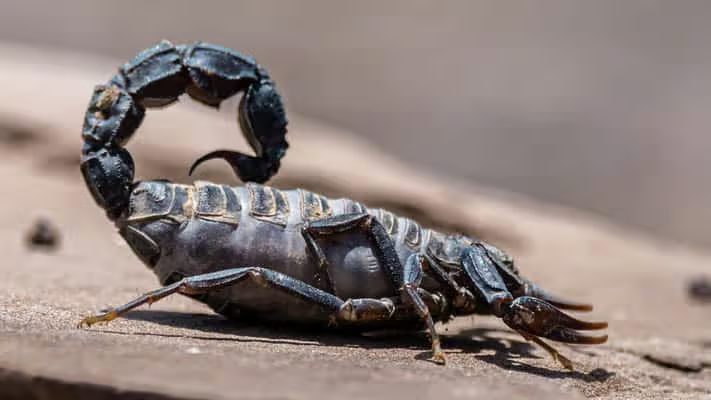
Scorpions have a segmented body, a pair of pincers, and a narrow, curved tail tipped with a venomous stinger; color and size vary by species and region.
Signs of a Scorpion Infestation
The most obvious sign is seeing scorpions themselves—under debris outdoors, or indoors at night in garages, basements, bathrooms, and along baseboards. A UV black light can help locate them after dark because many scorpions fluoresce under ultraviolet light.
You may also notice scorpions under firewood, rock piles, landscape timbers, and stored materials near the foundation. Indoor activity often increases after weather changes that drive outdoor prey and predators toward shelter.
Because scorpions are secretive, lack of daytime sightings does not mean they are absent. Night inspections and attention to harborage near the structure are more informative than looking only during the day.
Where Do Scorpions Hide?
Outdoors, scorpions favor cool, dark microhabitats: rock piles, woodpiles, masonry gaps, dense ground cover, irrigation valve boxes, and clutter against the foundation. During the day they remain still and compressed into cracks or under objects.
Indoors, they may rest in shoes, stored boxes, laundry on floors, wall voids, attics connected to exterior gaps, and damp bathrooms or utility rooms. Garages and basements are common staging areas between yard harborage and living spaces.
Reducing exterior harborage and sealing entry points is as important as treating what you find inside. Scorpions that keep entering usually have outdoor cover and prey nearby.
Garage
commonAn attached or detached vehicle storage space that pests can use as an entry point into the home.
Basement
occasionalA below-grade space that is often damp and dark, making it attractive to a wide range of pests.
Bathroom
occasionalA moisture-rich room that attracts pests drawn to humidity and standing water.
Firewood
commonStacked firewood that commonly harbors wood-boring insects, ants, and spiders close to the home.
Shed
occasionalA small detached outbuilding used for storage that can shelter pests away from the main house.
Why Are Scorpions Bad for My Home?
Scorpions deliver a painful sting. For most species the effect is comparable to a bee sting, but some—most notably the bark scorpion in parts of the desert Southwest—can cause more serious reactions that require medical attention, especially in young children and sensitive individuals.
Beyond sting risk, repeated indoor sightings create stress for households, particularly where children, elderly residents, or pets are present. Scorpions do not typically damage structures or contaminate food the way rodents do, but safety is the primary concern.
Leaving outdoor harborage and open entry points unaddressed allows ongoing risk even after individual scorpions are removed. Consistent exclusion and habitat modification matter as much as reactive removal.
| Concern | Severity | What it means |
|---|---|---|
| StingsPrimary | moderate | Direct physical harm to people from pest stings, which can cause pain and localized or systemic reactions. |
| Venom | moderate | Risk of venomous injury from pests such as certain spiders, scorpions, or snakes. |
| Bites | low | Direct physical harm to people from pest bites, which can cause pain, irritation, or infection. |
What scorpions put at risk, and how urgent each one is.
How Do I Get Rid of Scorpions?
Effective control combines harborage reduction, exclusion, and targeted treatment. Remove woodpiles, rock piles, and debris near the foundation; elevate firewood; reduce dense ground cover against the house; and seal gaps, weatherstripping, and door sweeps. Shake out shoes and bedding in high-activity areas.
Pest Control Company treatment often includes perimeter and crack-and-crevice applications timed for scorpion and prey activity, plus inspection of likely outdoor harborage. Reducing outdoor insect prey can also make the property less attractive over time.
Do not rely on sticky traps or occasional sprays alone for long-term results. The durable approach seals the structure, cleans up exterior cover, and maintains a monitored perimeter program in scorpion-prone regions.
Methods, what a professional visit looks like, and what goes wrong when scorpions are treated the wrong way.
When Should I Call a Pest Control Company for Scorpions?
Call a Pest Control Company if scorpions are found indoors repeatedly, if you live in an area with medically significant species such as bark scorpions, or if young children, elderly residents, or pets share the home. Nighttime activity in bathrooms and bedrooms warrants prompt evaluation.
Pest Control Companies are also valuable when exterior landscaping, rockwork, or complex foundations create many harborage sites you cannot reasonably eliminate alone. They can combine exclusion recommendations with appropriate product placement.
If you have sealed some gaps but still find scorpions, entry points or outdoor conditions remain favorable. That is the right time for a full property assessment rather than one-off indoor removals.
Scorpions: common questions
Are all scorpion stings dangerous?
Most scorpion stings are painful but not life-threatening for healthy adults. A few species, including the bark scorpion in parts of the Southwest, can cause more severe symptoms. Seek medical care for stings involving children, severe reactions, or known high-risk species.
Why do I find scorpions in my bathroom?
Bathrooms offer humidity, floor-level gaps, and dark spaces under cabinets. Scorpions often wander indoors at night while hunting or seeking shelter and may end up in bathrooms and garages. Sealing gaps and reducing outdoor harborage lowers these encounters.
Do black lights really find scorpions?
Many scorpions fluoresce under ultraviolet light, making night inspections with a UV light a useful detection method. Black lights help locate activity but do not replace exclusion and harborage reduction. Combine detection with sealing and Pest Control Company treatment when activity is ongoing.
Will killing one scorpion solve the problem?
Removing a single scorpion does not address outdoor harborage, prey insects, or entry points that allow more to arrive. Ongoing indoor finds usually mean the property still supports nearby scorpions. Long-term control requires habitat changes and sealing.
What attracts scorpions to my yard?
Shelter and food attract scorpions—rock and wood piles, clutter, irrigation boxes, and abundant insects drawn by outdoor lighting. Warm, dry regional climates favor many species. Reducing cover and managing insect prey makes yards less inviting.
Can I keep scorpions out without chemicals?
Exclusion and habitat modification are core non-chemical steps: seal gaps, install door sweeps, remove debris, and elevate stored materials. In high-pressure areas, Pest Control Company perimeter treatment may still be needed alongside those steps. Integrated approaches work best.
Get scorpions help near you
Search local, licensed pest control companies by ZIP code.
Looking for a specific service? Browse general pest control companies.